2 hr
Versailles Palace and Gardens Guided Tour with Priority Entry
- Expert local guide
- Small group
- Skip-the-line access
- Free cancellation
Half Day Tour to Versailles From Paris — Priority Access & Guided Options
Royal apartments and mirrored halls await, twenty kilometres from the capital
Compare fares, pick the fit — all bookings are mobile-voucher and eligible for free cancellation where shown.
2 hr
9 hr 30 min
1 hr 30 min
Selecting the correct entry level is essential when planning a half day tour to versailles from paris to ensure you see the Hall of Mirrors and royal gardens efficiently. These official options provide different levels of access to the UNESCO heritage site and its vast estate.
| Palace Ticket Access to Palace only |
Top pick Passport Ticket Full estate access |
|
|---|---|---|
| Access Areas | Palace only | Palace, Gardens, Trianon Estate |
| Price | 21 EUR | 24 EUR |
| Timed Entry | Required | Required |
| Best Arrival Window | 09:00–10:30 | 09:00–10:30 |
| Best For | Quick visitors | First-time visitors |
| See tickets & prices |
Verdict: Most visitors choose the Passport ticket to see the full scope of this Paris landmark.
Worth it for comfort and context
A half day tour to versailles from paris delivers structured access to one of Europe's most sprawling palace complexes without the friction of independent planning. The estate covers 800 hectares — the Hall of Mirrors, State Apartments, and formal gardens require strategic navigation to avoid backtracking. Organized options bundle priority entry with expert commentary, bypassing security queues that stretch past an hour by midday. Round-trip transport from central Paris removes the need to decode suburban rail connections or coordinate return timing. The Passport ticket costs €24 when purchased independently; guided tours from Paris with transportation typically range €65–95, absorbing both transit and context. For first-time visitors prioritizing efficiency over budget flexibility, the premium covers logistical certainty and curatorial insight that transforms gilded rooms into decoded narratives of absolutist power. Repeat visitors or those comfortable with self-guided exploration may find independent access sufficient, especially outside peak summer months.
Bottom line: Half day tour to versailles from paris tickets convert the estate's overwhelming scale into a manageable, narrated experience — the convenience premium pays off unless you prioritize solo flexibility over structured efficiency.
They complement each other; most visitors who do both call the half day tour to versailles from paris the more thrilling, while Giverny offers a tranquil, intimate alternative for art lovers.
|
Top pick Palace of Versailles |
Giverny (Monet's House) | |
|---|---|---|
| Focus | Royal grandeur and history | Impressionism and nature |
| Primary attraction | Hall of Mirrors and Gardens | Monet's house and water lilies |
| Travel time | 40–60 minutes | 1.25 hours |
| Typical duration | Full day | 1–2 hours |
| Best arrival window | 09:00–10:30 | Early morning |
| Entrance fee | 24 EUR (full access) | ~13 EUR |
| See tickets & prices |
Verdict: Choose the palace for a grand, iconic French landmark experience, or pick Giverny for a relaxing, scenic half day tour to versailles from paris tour alternative centered on impressionist art.
Hand-picked experiences loved by thousands of travelers
5 hours 30 minutes
Free Cancellation
Escape the capital for a half-day journey to France's most magnificent royal château with skip-the-line access
3 hours
Free Cancellation
Round-trip train from Paris, guided palace tour with timed entry, and freedom to roam the gardens
1 hour 30 minutes
Free Cancellation
Skip queues and explore France's most magnificent royal residence with an expert guide
6.5 hours
Free Cancellation
Journey to Louis XIV's legendary residence with expert commentary, garden tour, and palace entry
4 hours
Free Cancellation
Journey to France's most magnificent royal residence with expert commentary and convenient transport
8 hours
Free Cancellation
Cycle across 2,000 acres of Versailles, enjoy fast-track palace entrance, explore markets, and picnic by the canal.
4 hours 30 minutes
Free Cancellation
Air-conditioned coach transport from central Paris to the magnificent Versailles estate and back
6 hours
Free Cancellation
Skip-the-line access to Louis XIV's magnificent château with expert commentary and garden time
Pass through bag check and ticket control at Place d'Armes before entering the State Apartments
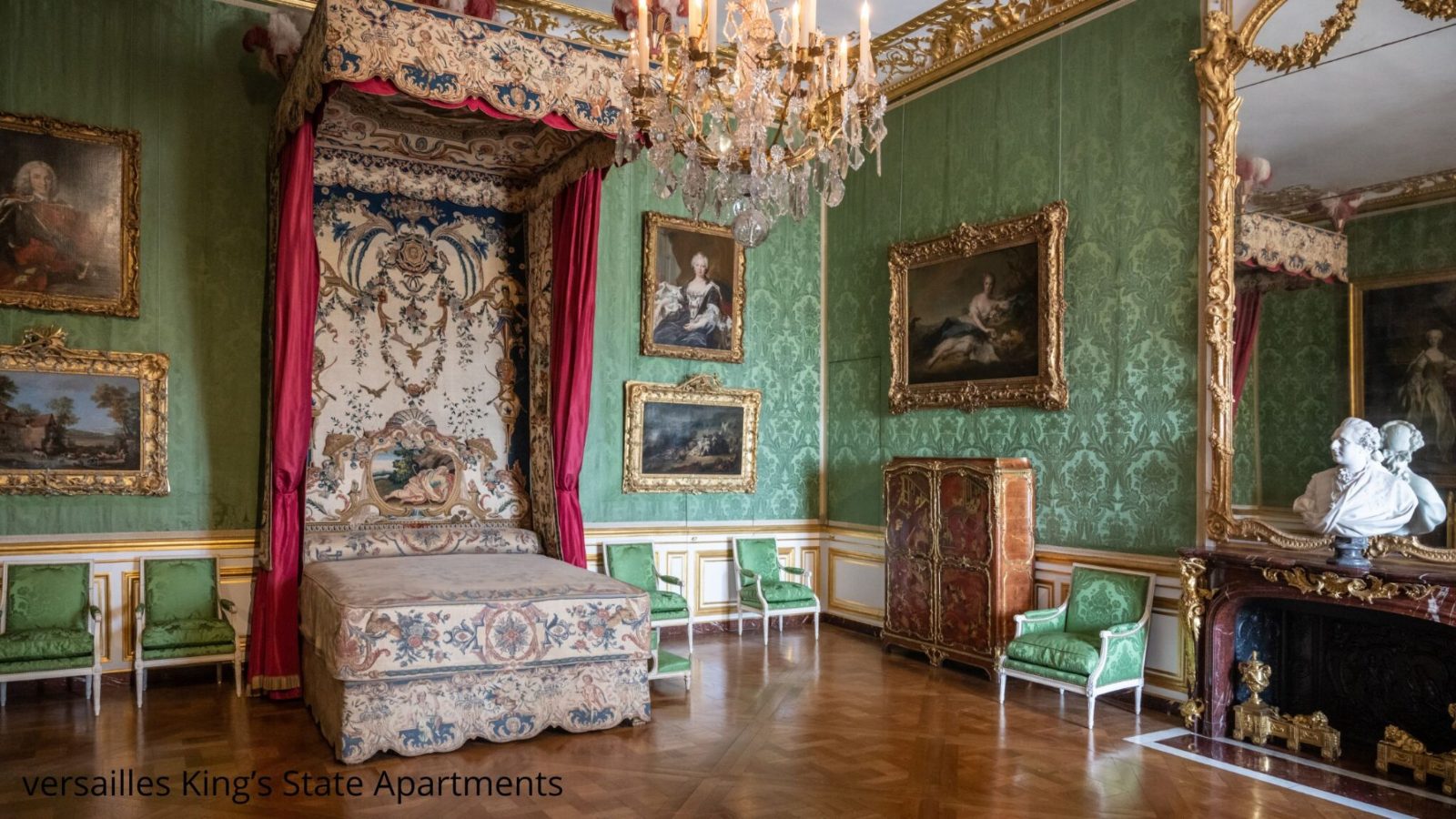
Walk through the King's and Queen's State Apartments leading to the Hall of Mirrors
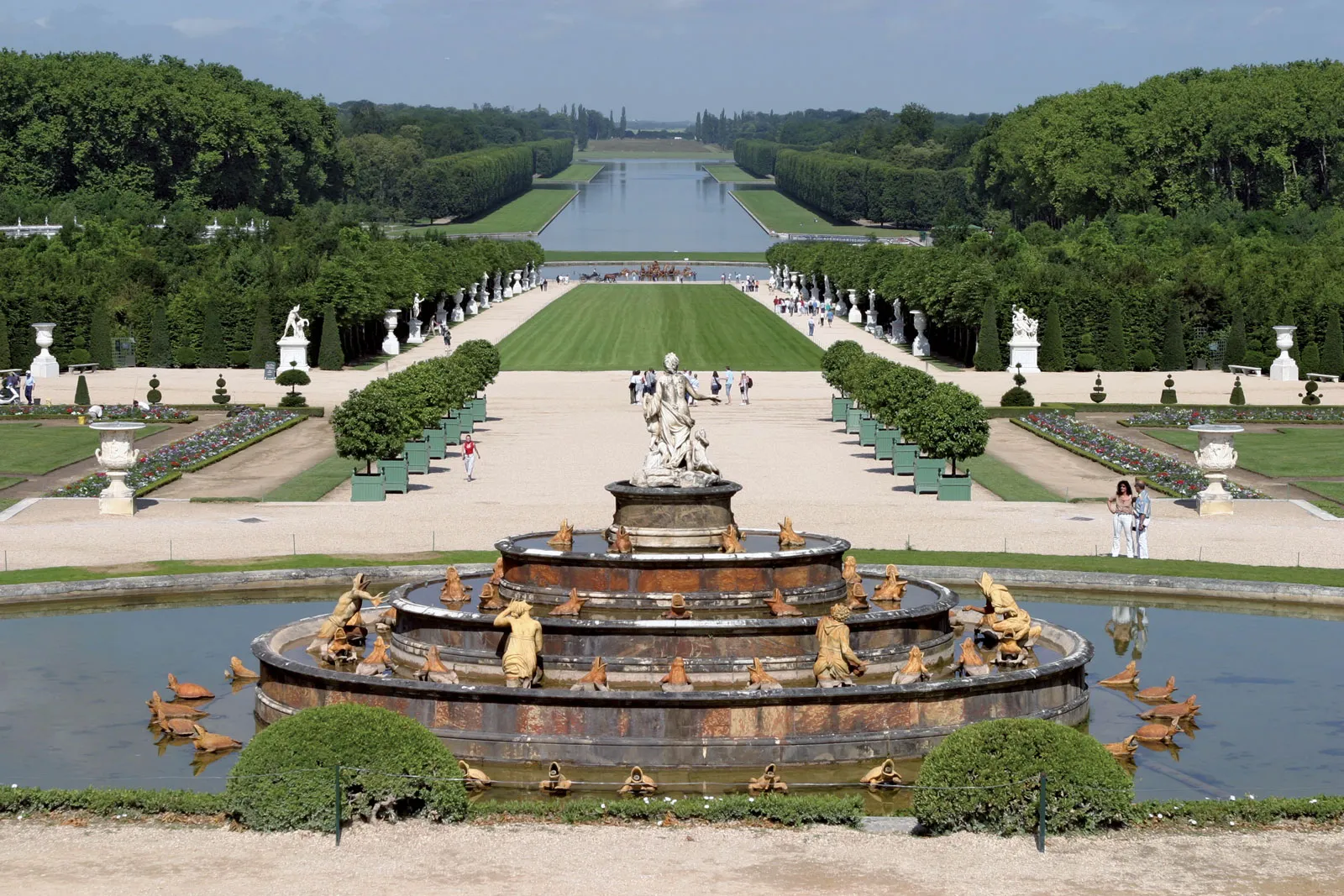
Explore the formal French gardens, Latona Fountain, and Grand Canal paths
Visit the Grand Trianon or Marie Antoinette's Estate if time allows
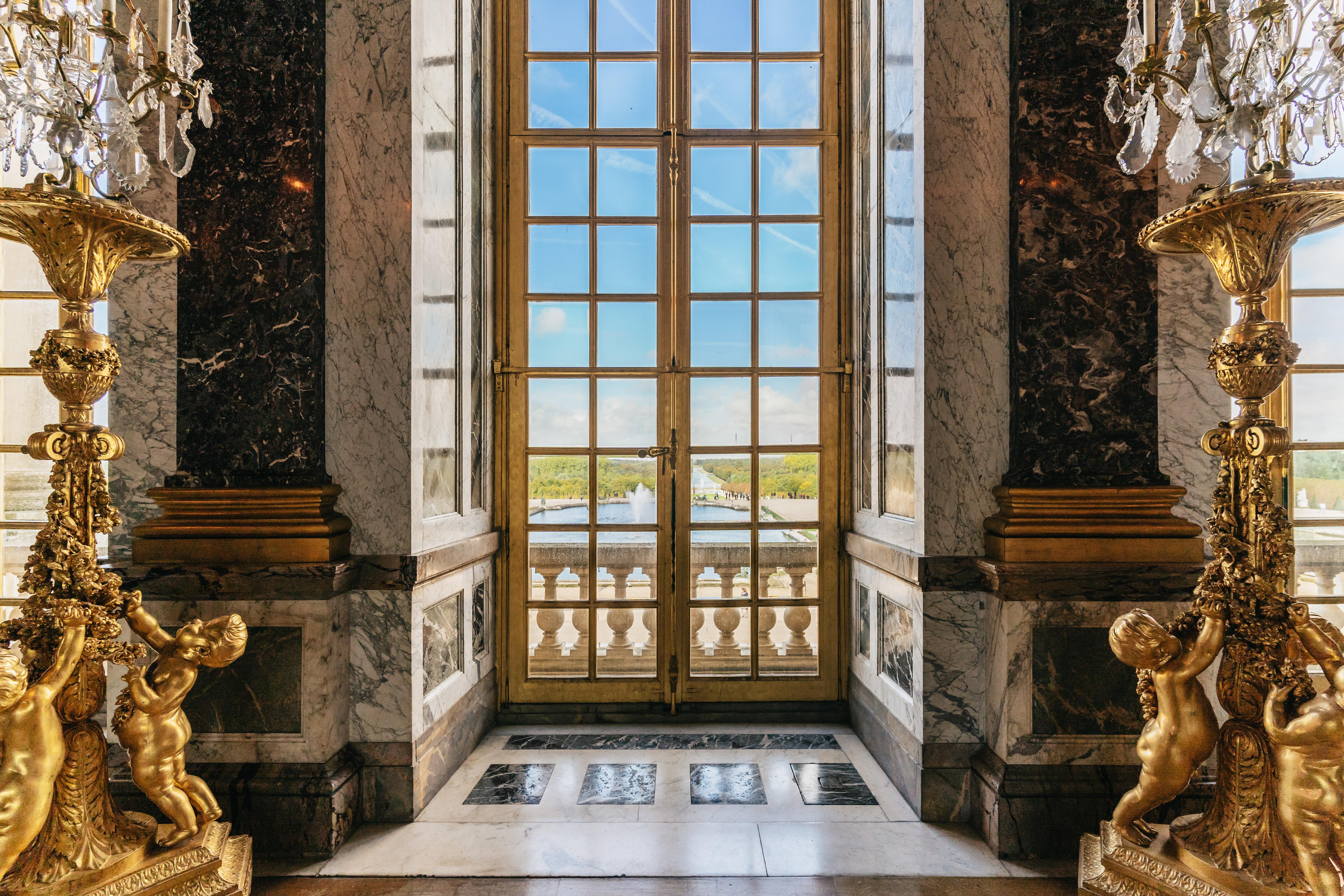
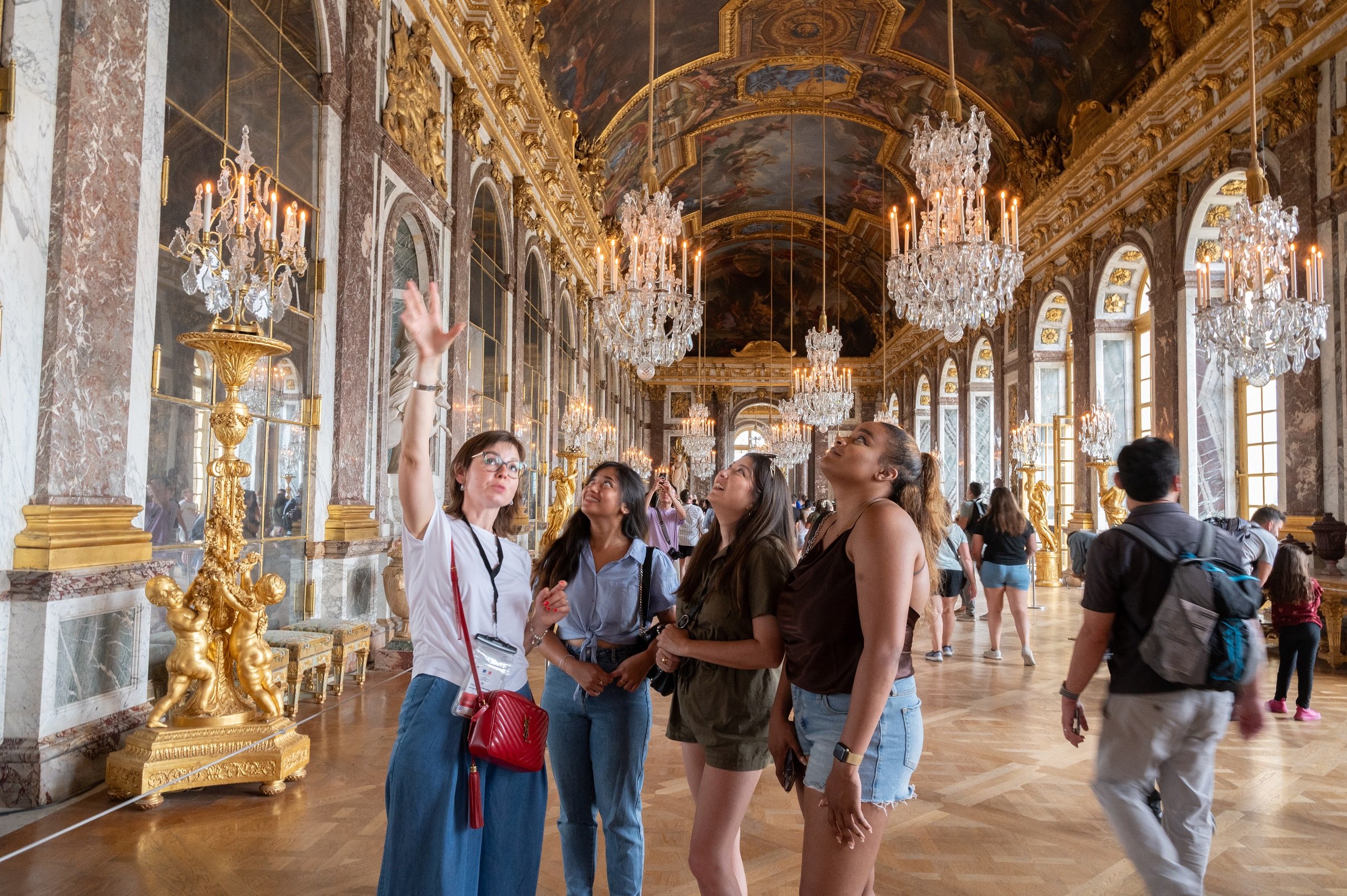
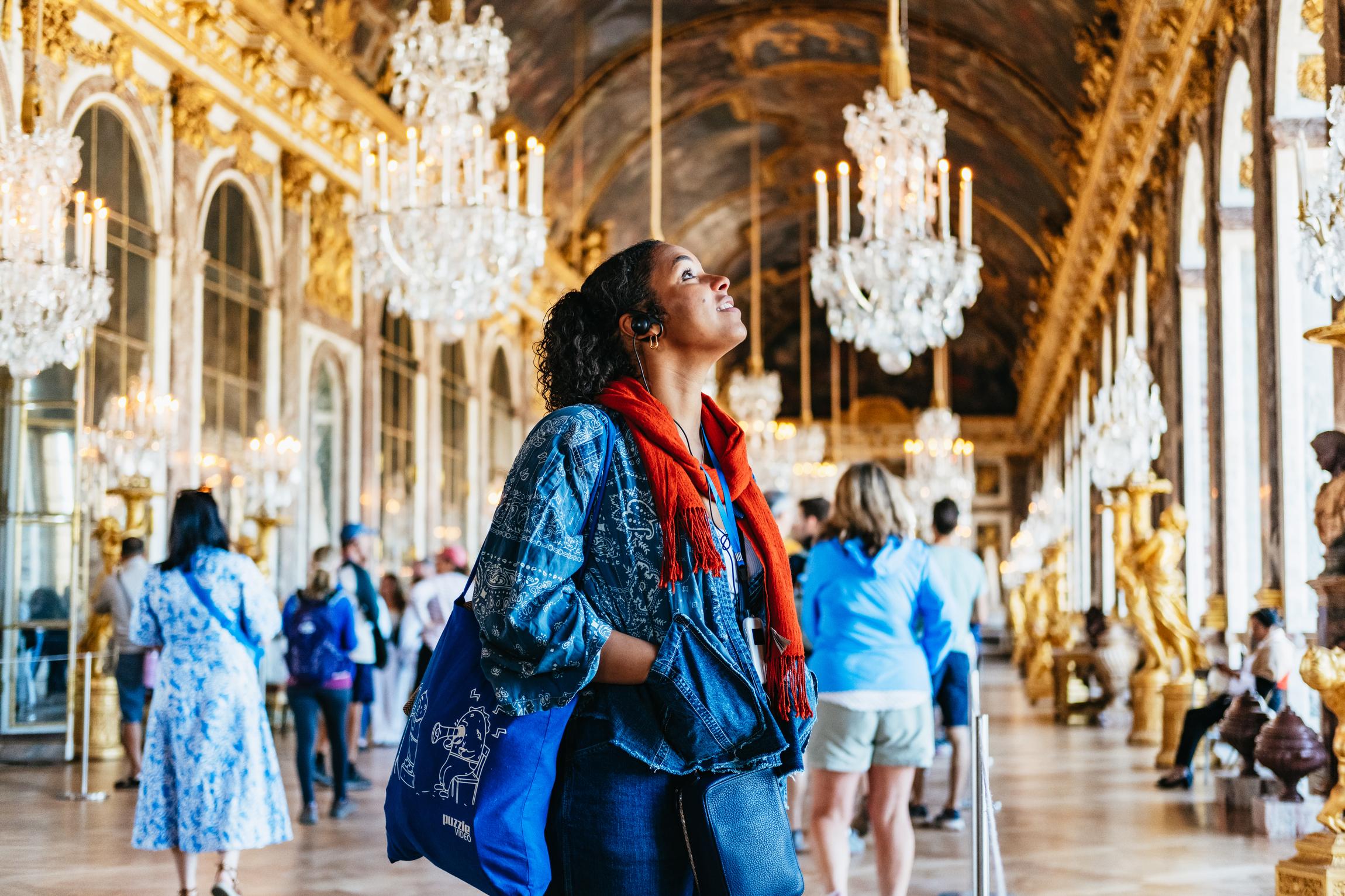
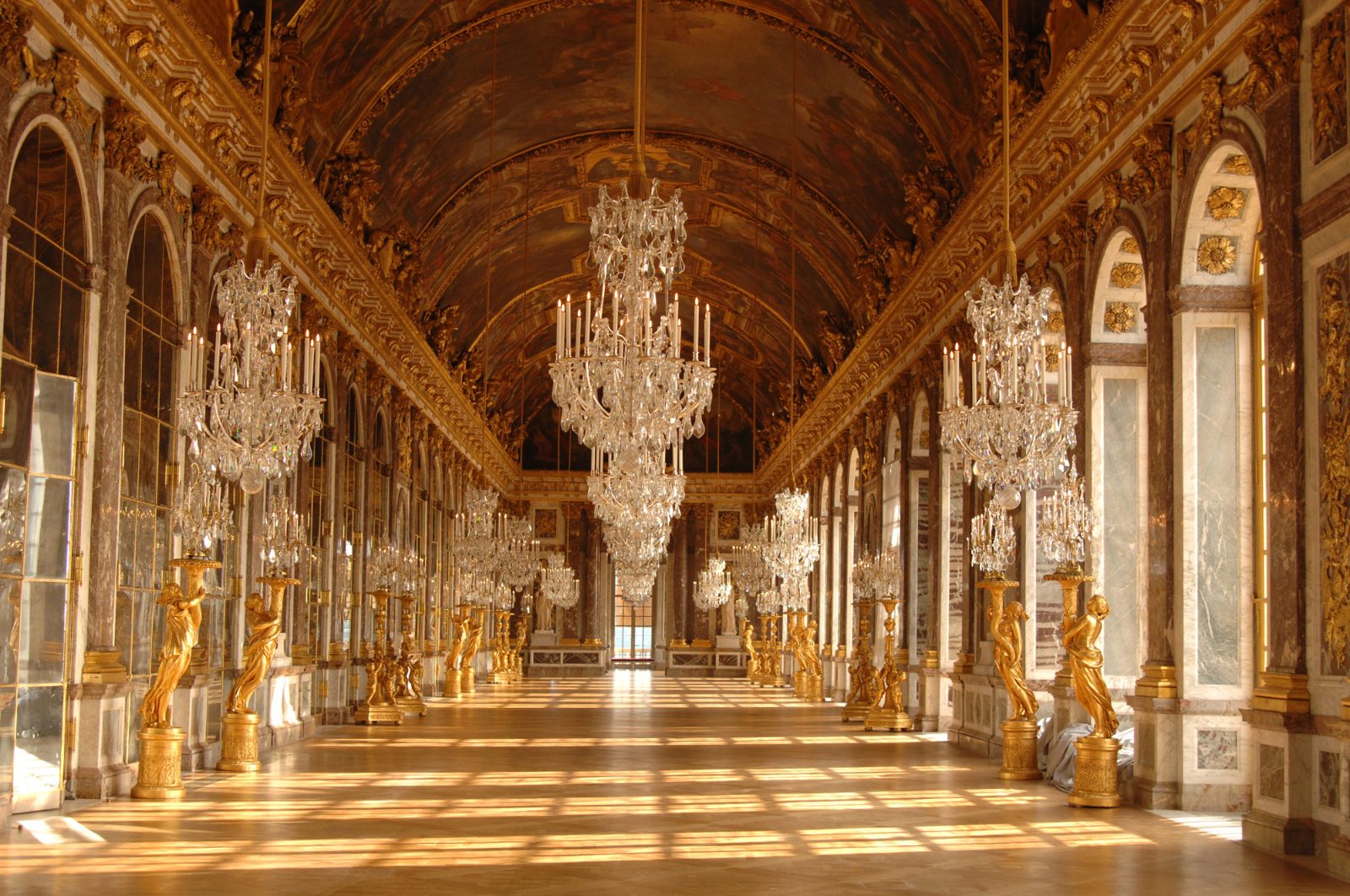
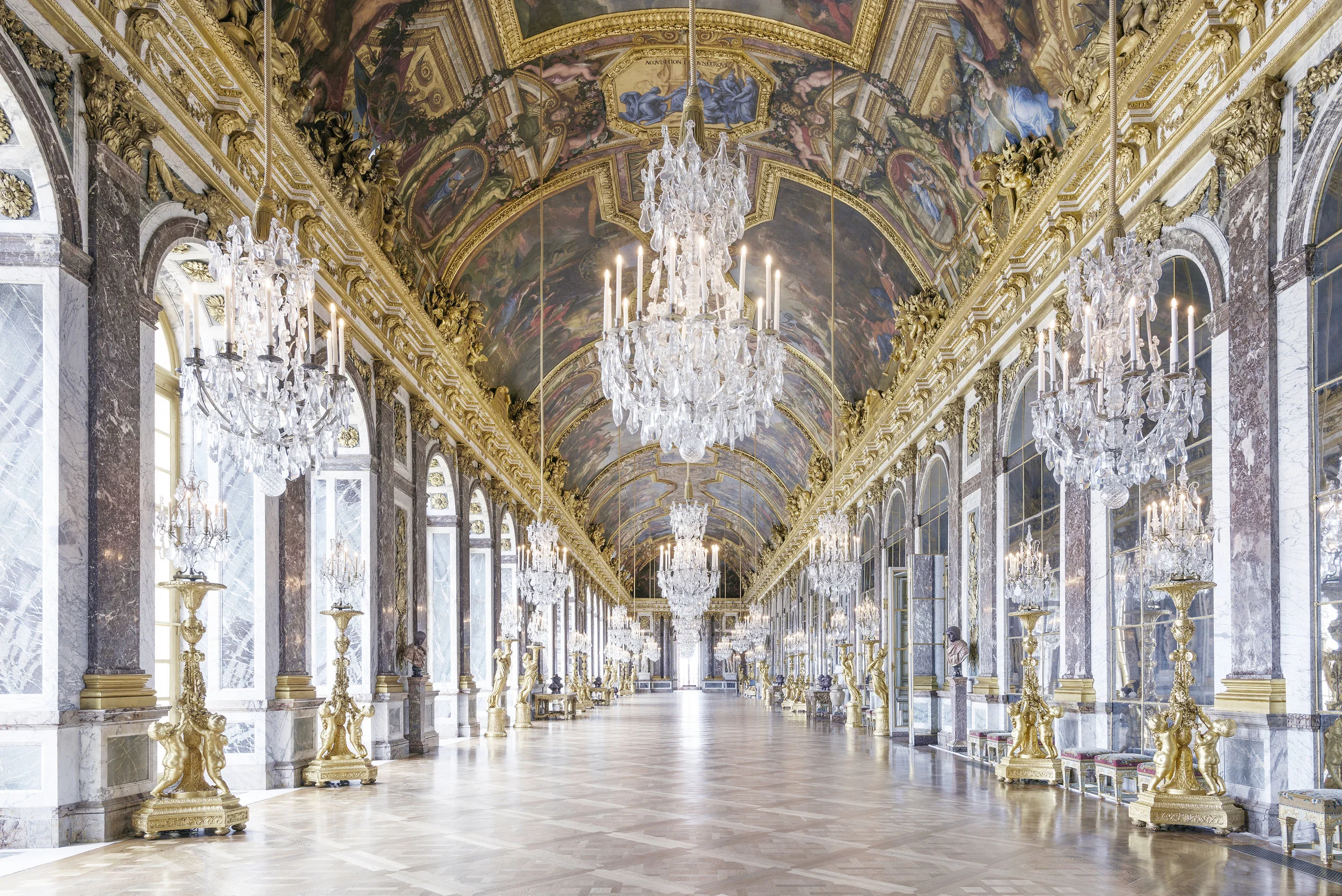
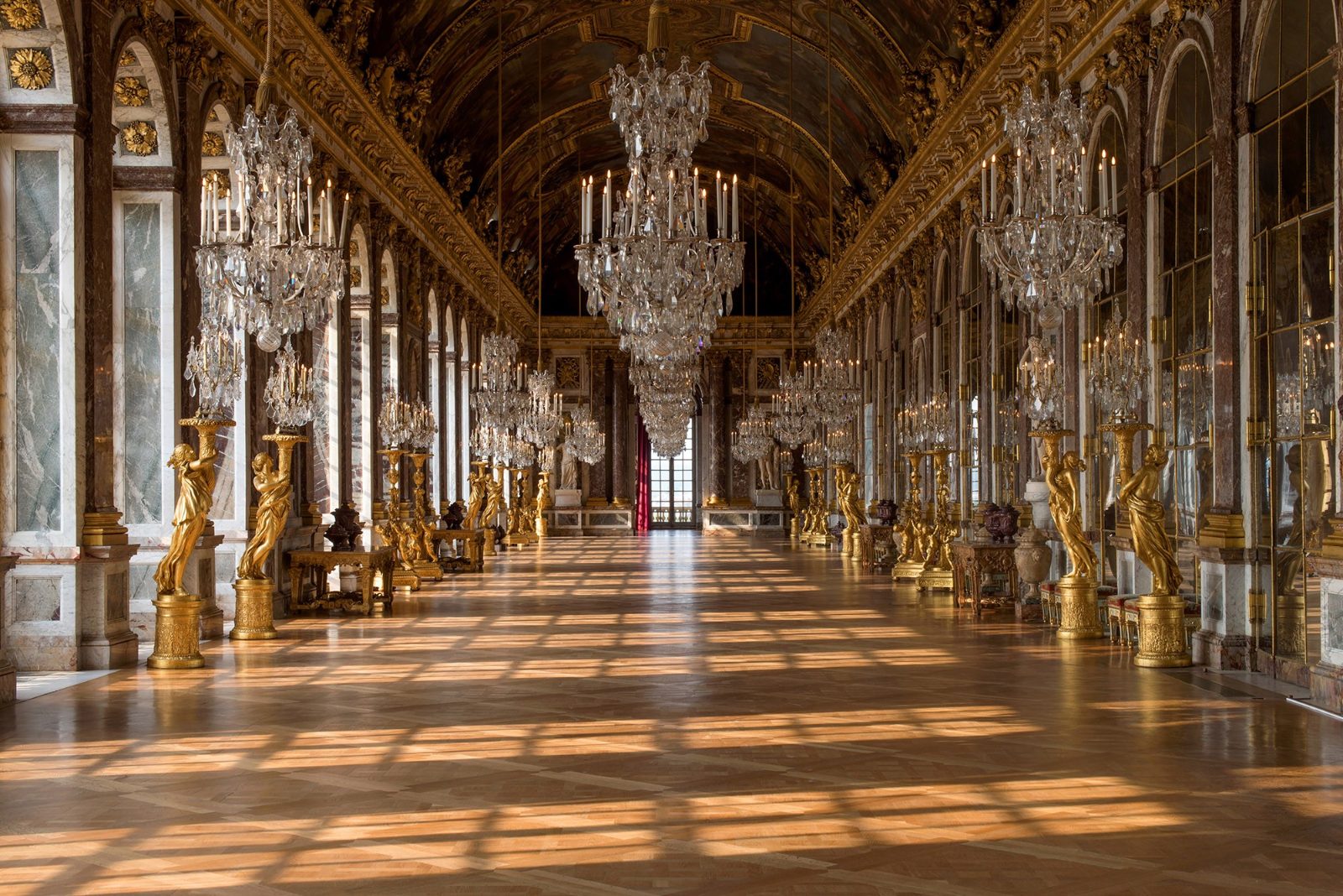
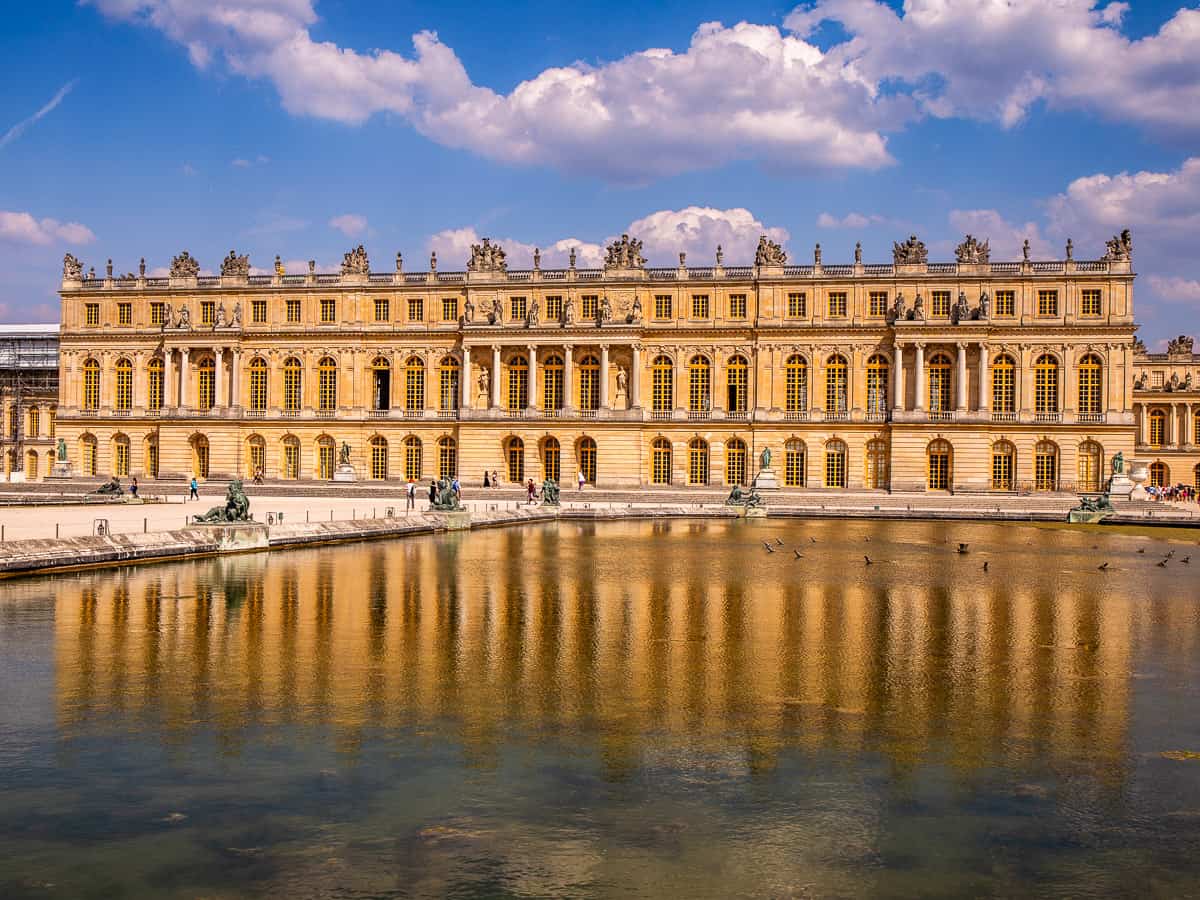
This 73-meter-long gallery features 357 mirrors reflecting 17 arched windows overlooking the gardens, built by Jules Hardouin-Mansart in the 1680s. It was the site of the 1919 Treaty of Versailles signing that ended World War I.
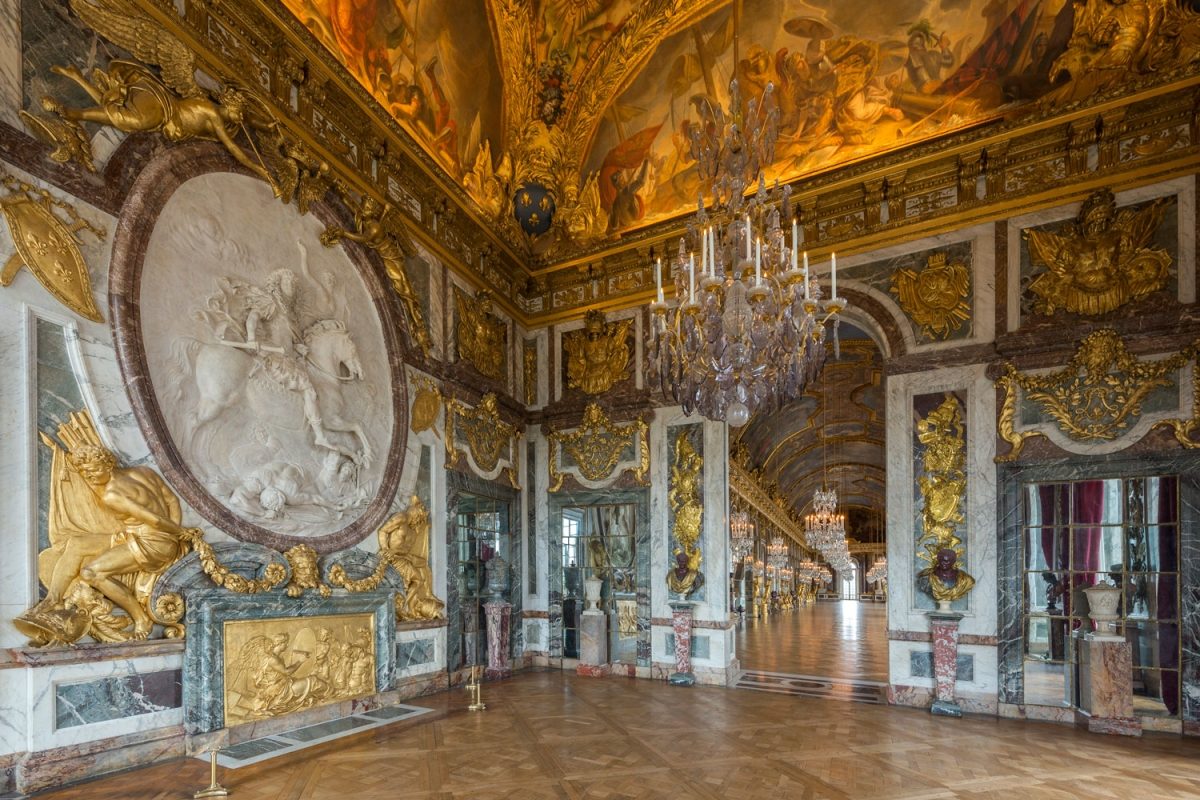
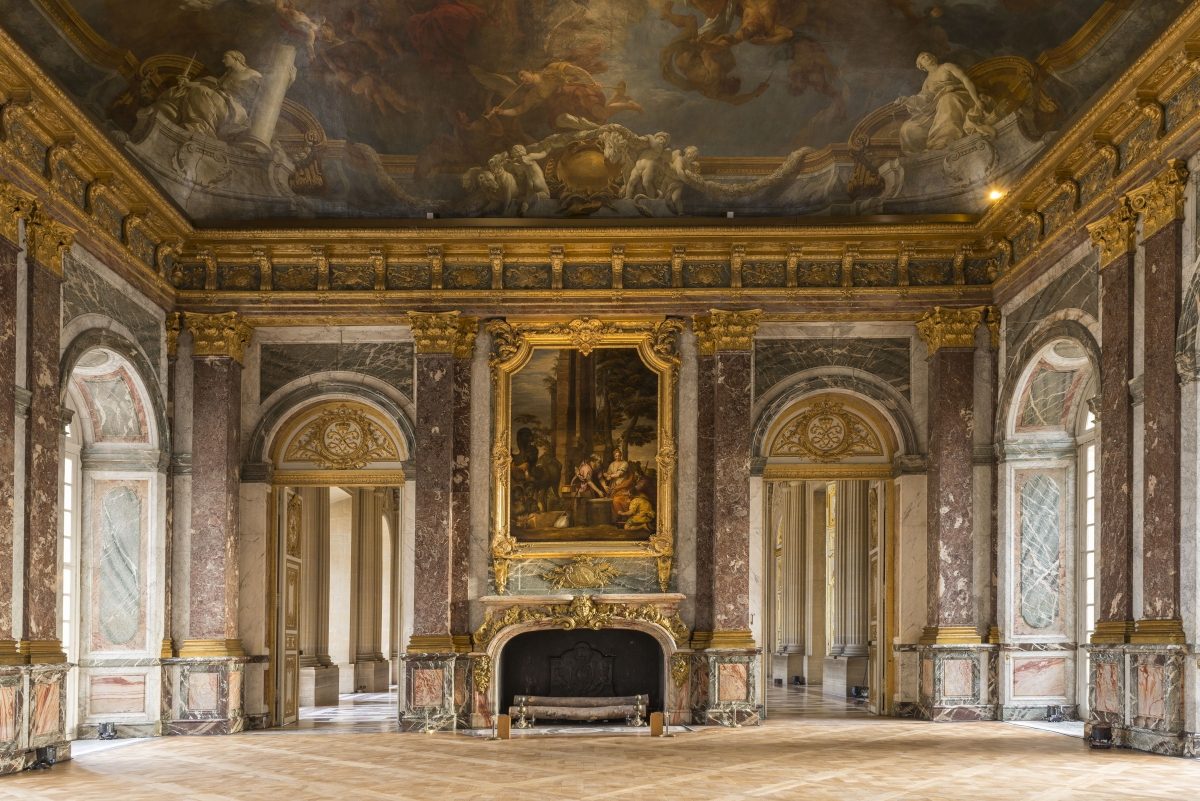
A sequence of seven rooms each dedicated to a planetary deity, used by Louis XIV for official court ceremonies and daily royal rituals. The King's Bedchamber at its center faces east to align with the rising sun.
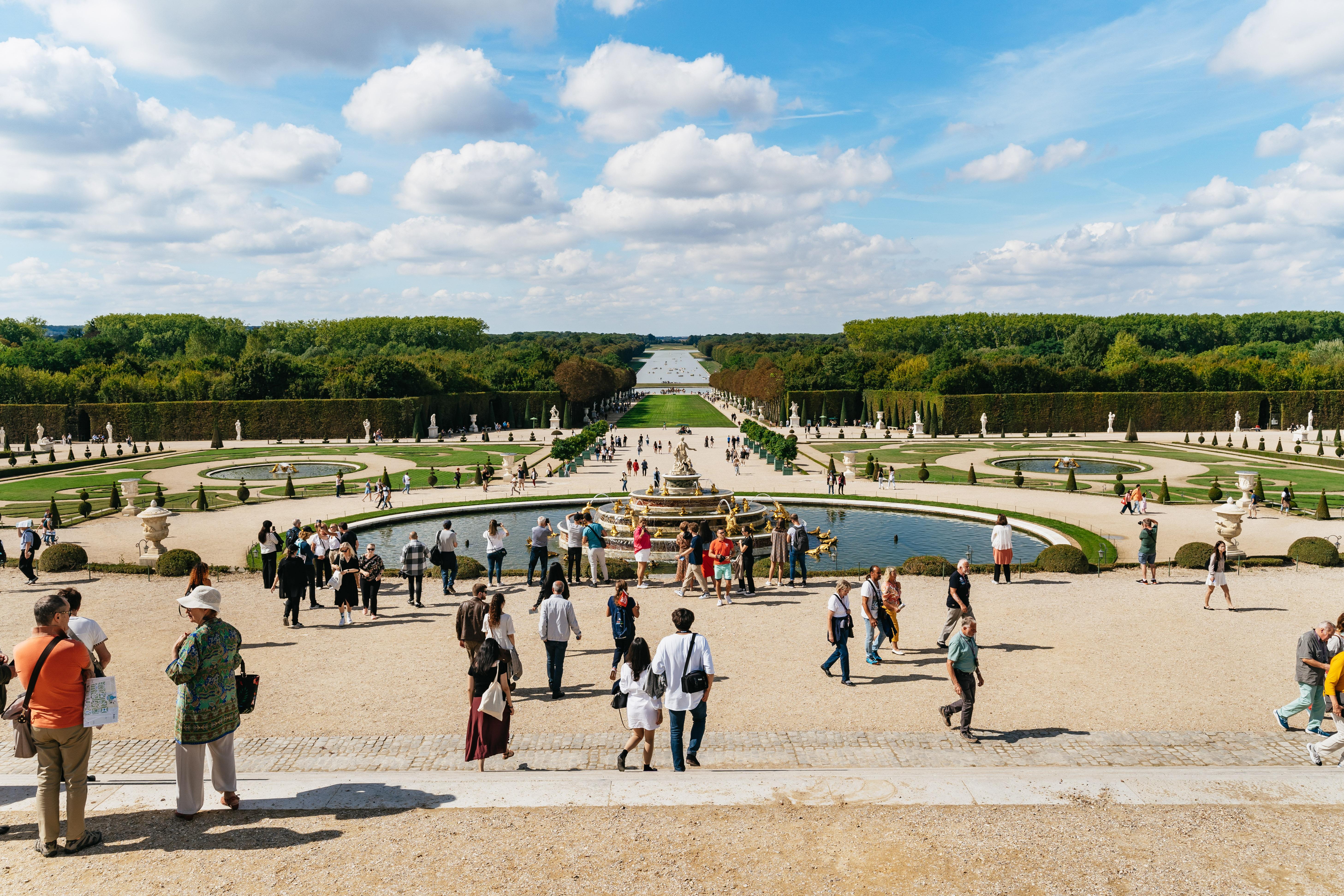
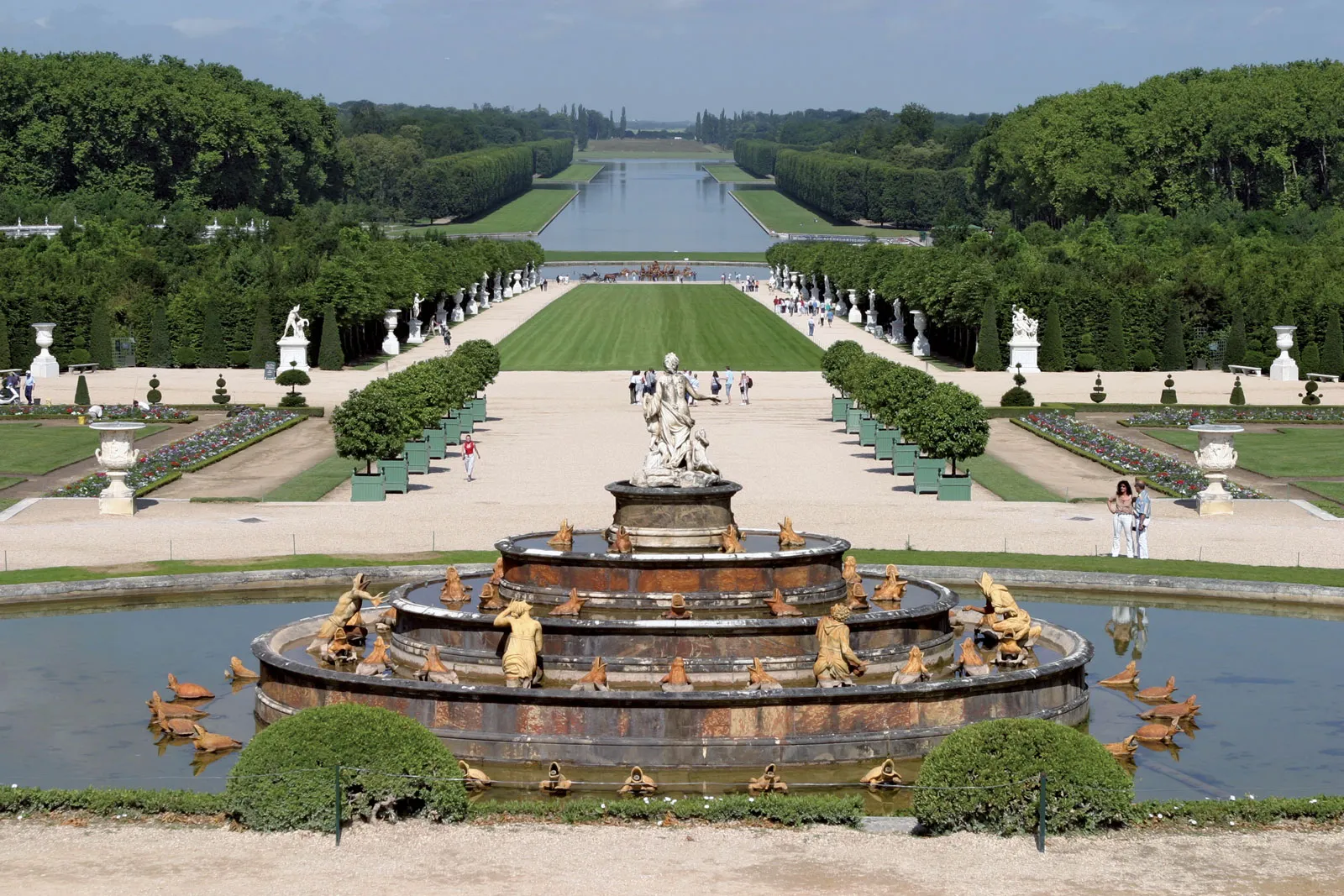
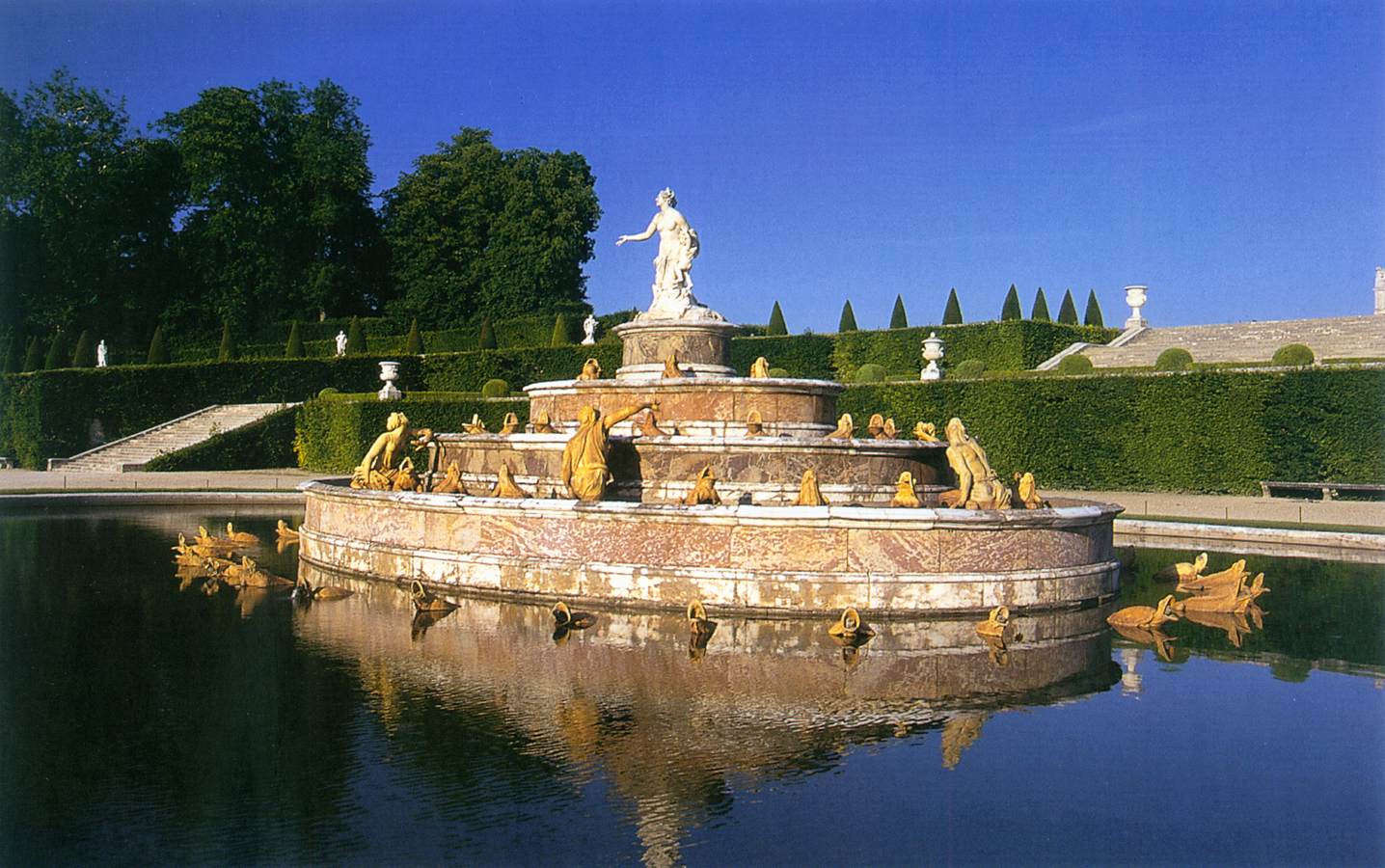
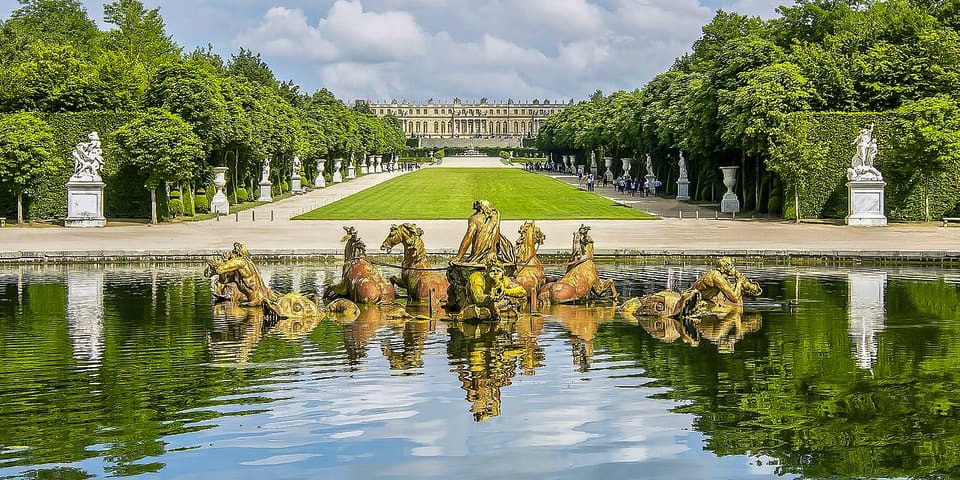
A tiered marble fountain depicting the goddess Latona and her children turning villagers into frogs, positioned on the main garden axis facing the Grand Canal. It was redesigned by André Le Nôtre in the 1660s-70s.
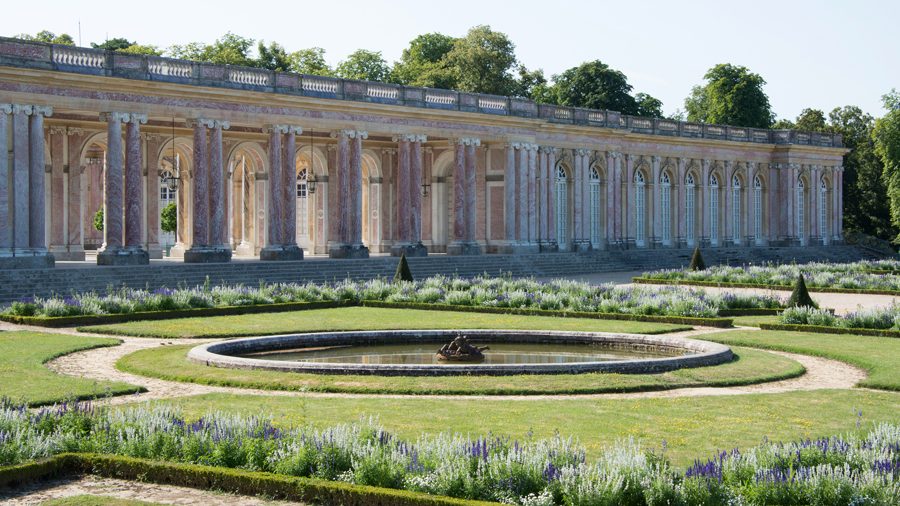
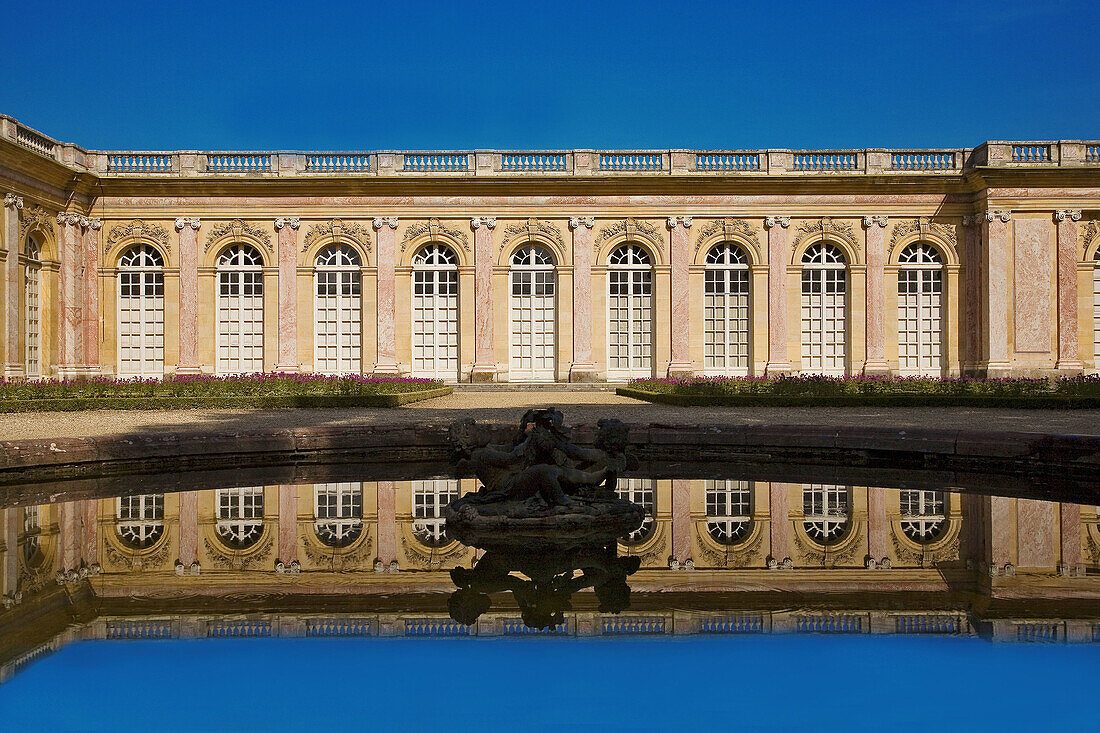
A single-story pink marble and stone retreat built in 1687 for Louis XIV to escape the formality of court life. Napoleon later restored it for his own use in the early 19th century.
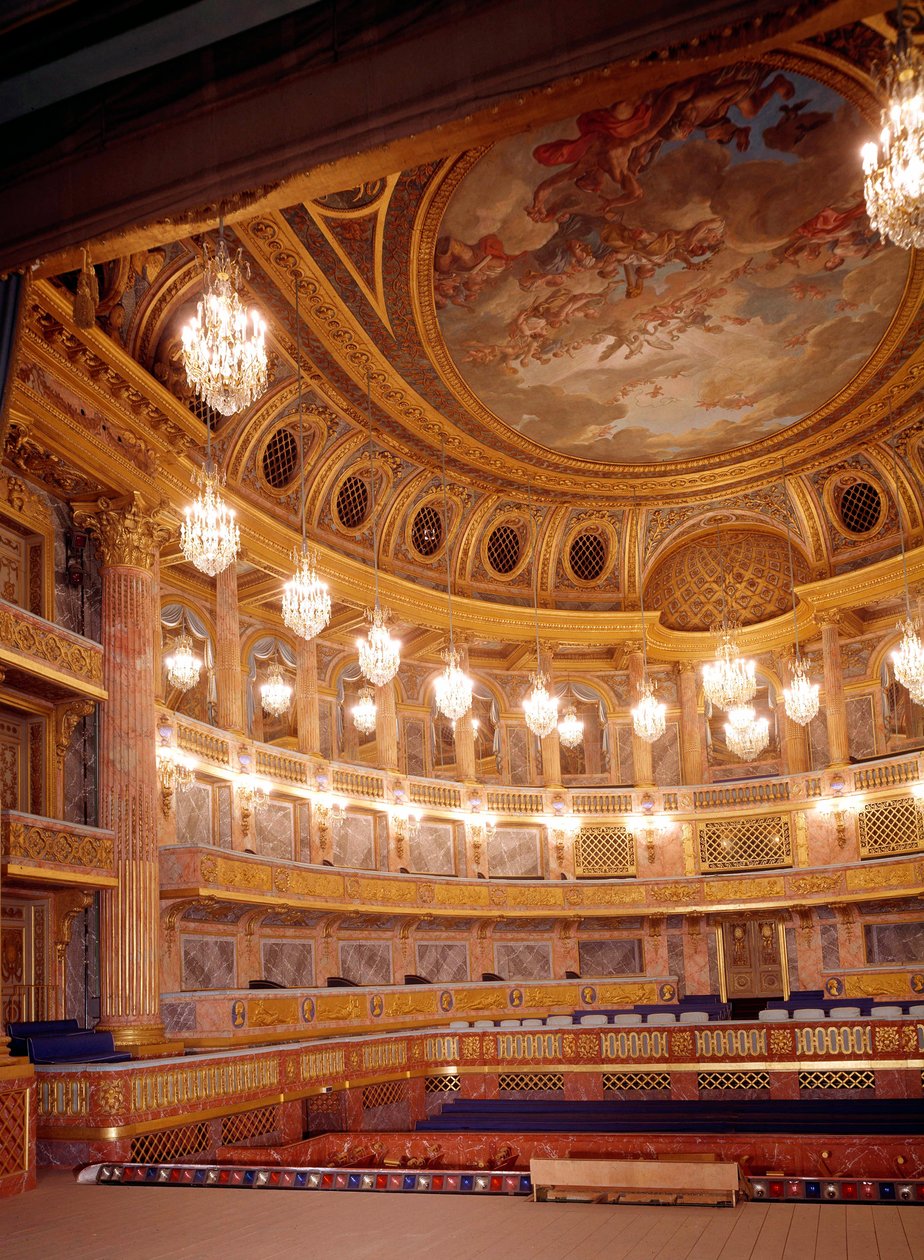
Completed in 1770 for the wedding celebrations of the future Louis XVI and Marie Antoinette, this wooden theater seats around 700 people. It remains one of the few surviving 18th-century court theaters in Europe.
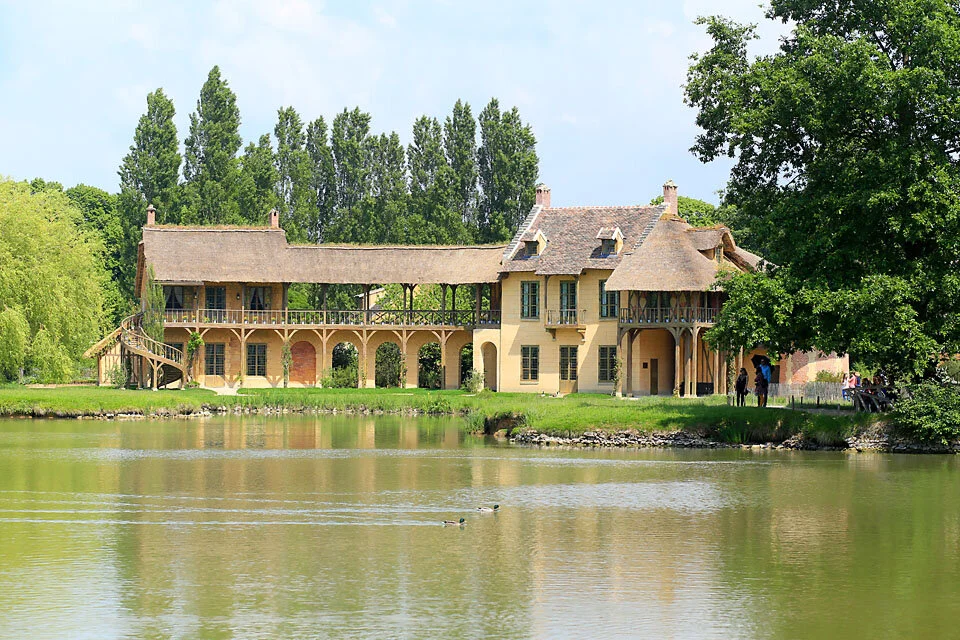
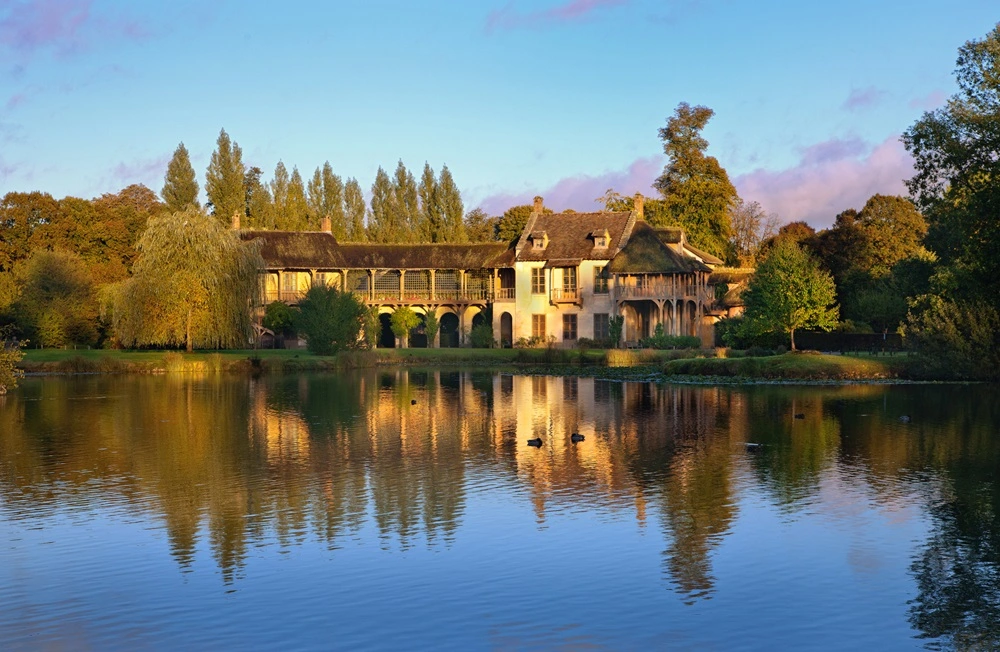
A rustic mock village with a working farm and thatched-roof cottages, built in 1783 as a private retreat for the queen away from formal court life. It includes a dairy, mill, and lakeside dwellings designed to resemble a Normandy village.
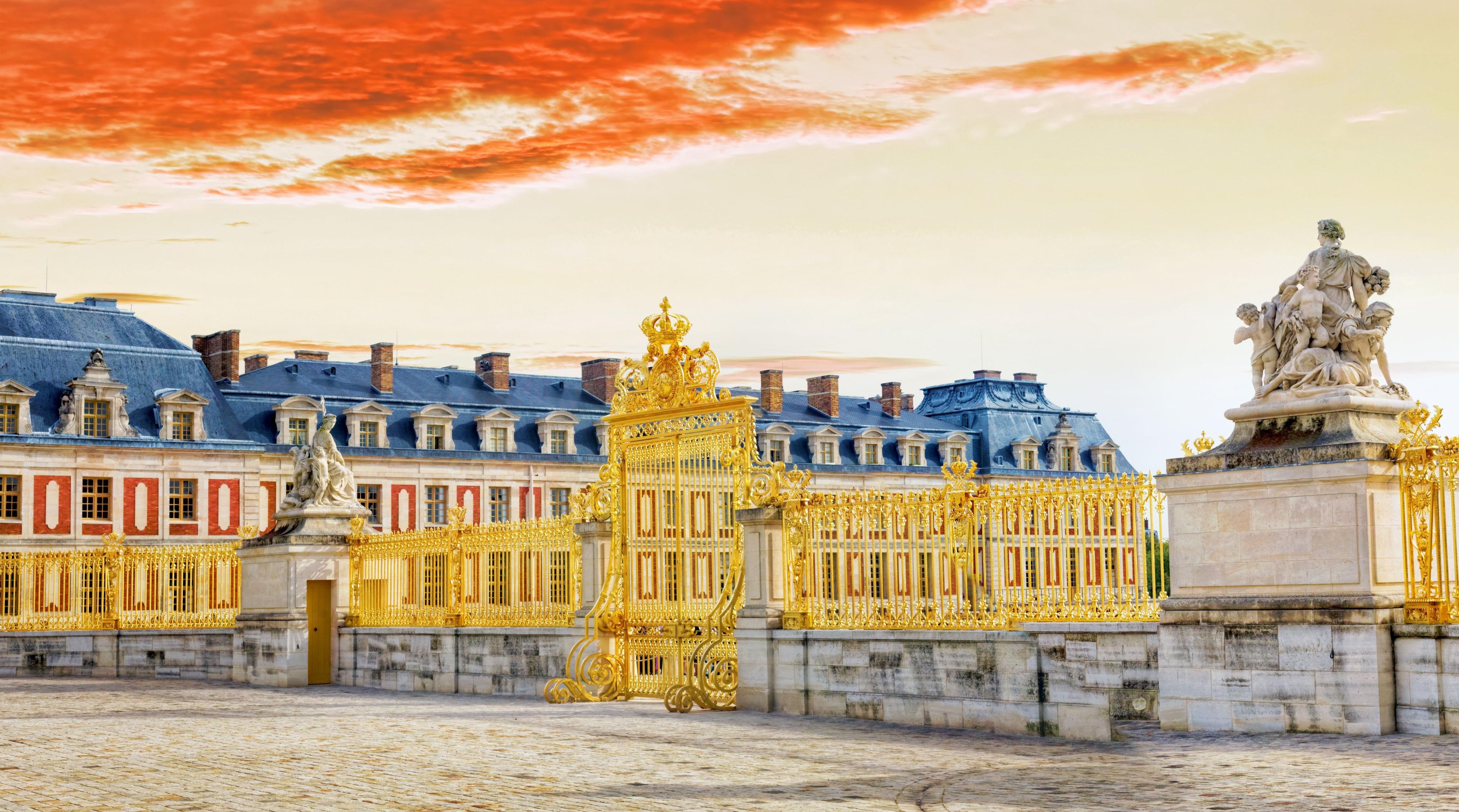
You board a coach or train at a central Paris meeting point — most departures leave between 8:30 and 9:00, positioning you at the palace gates by opening time. The journey southwest traces the Seine valley, passing Sèvres and Saint-Cloud before the gilded gates appear at the end of the Avenue de Paris.
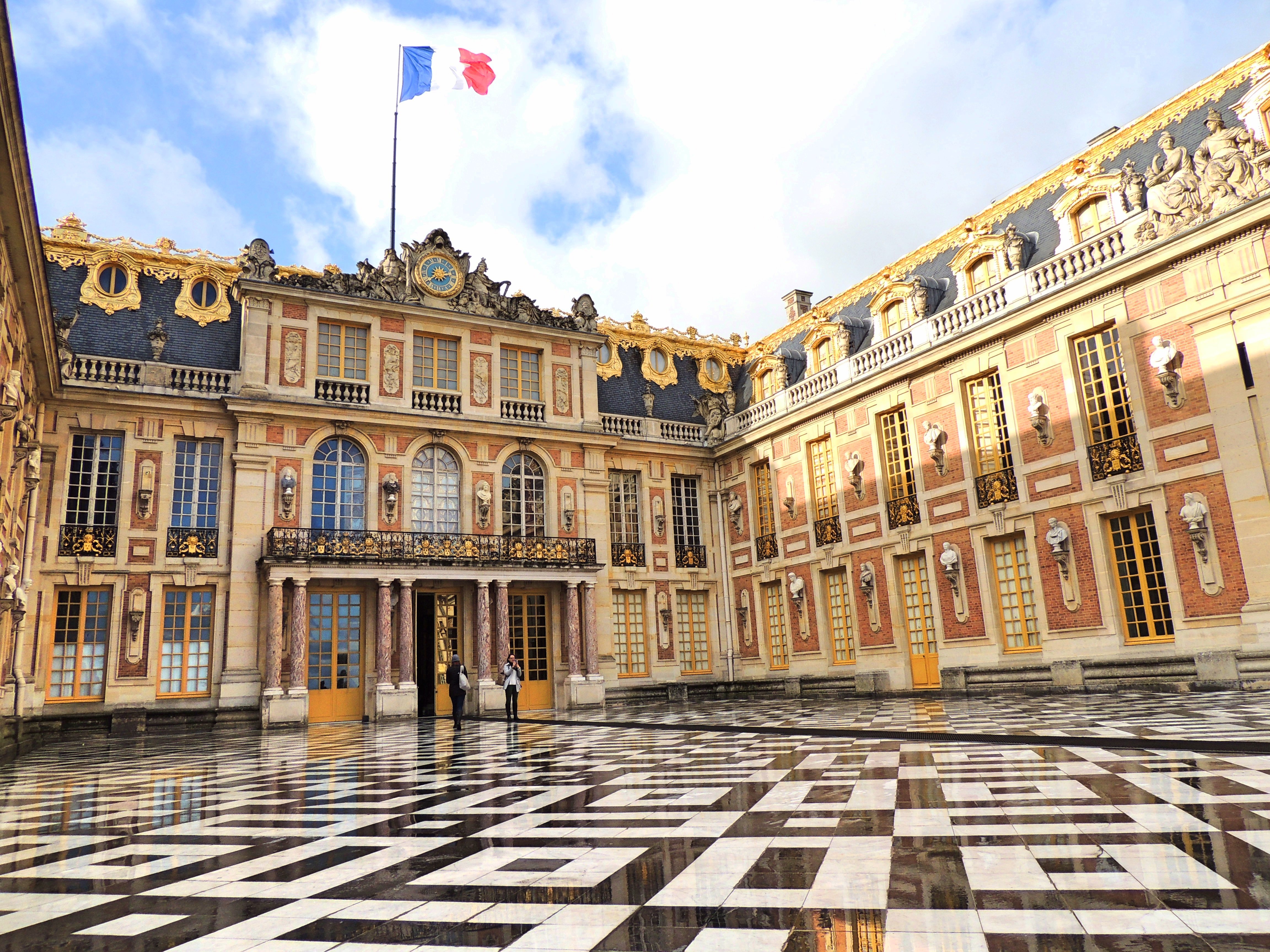
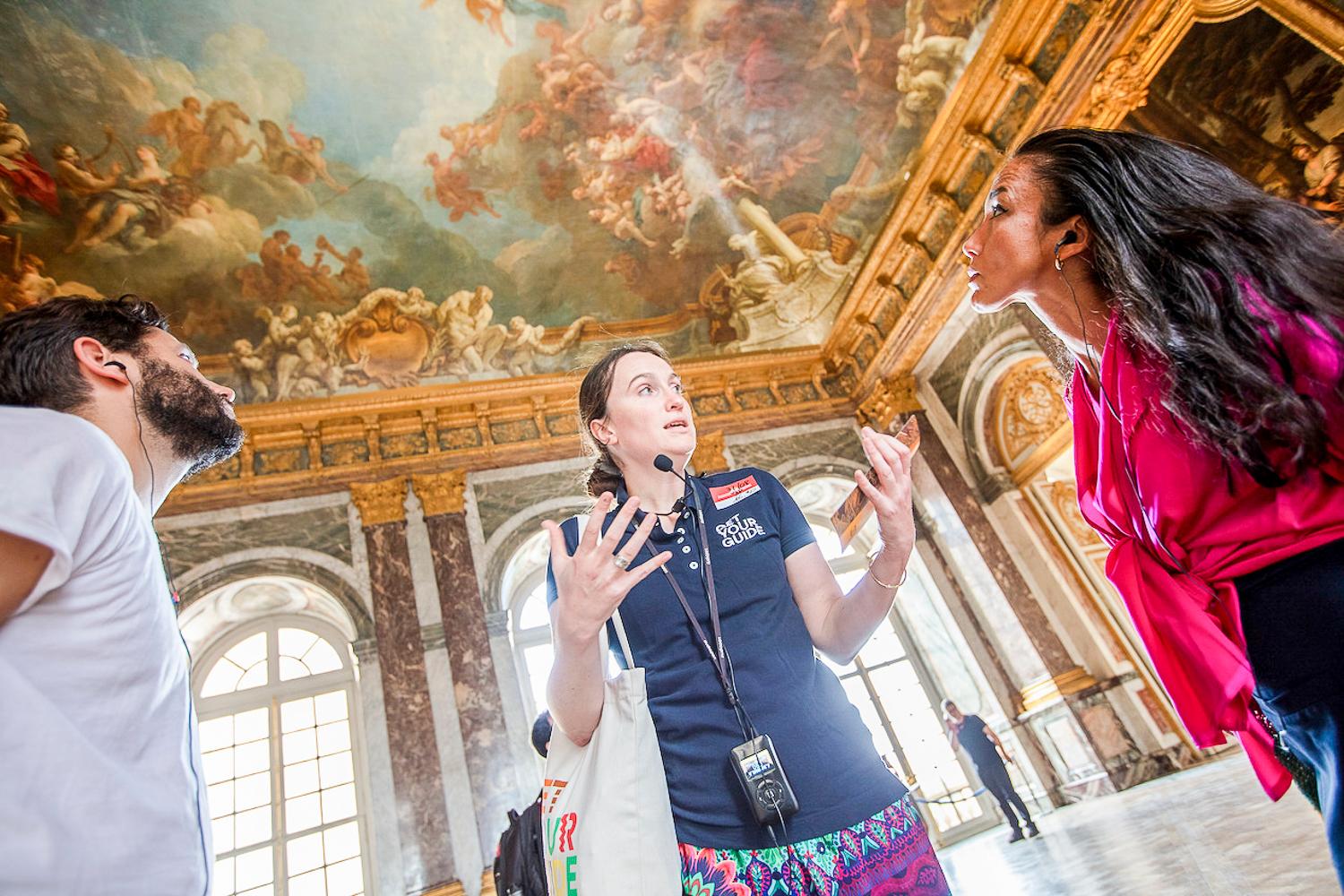
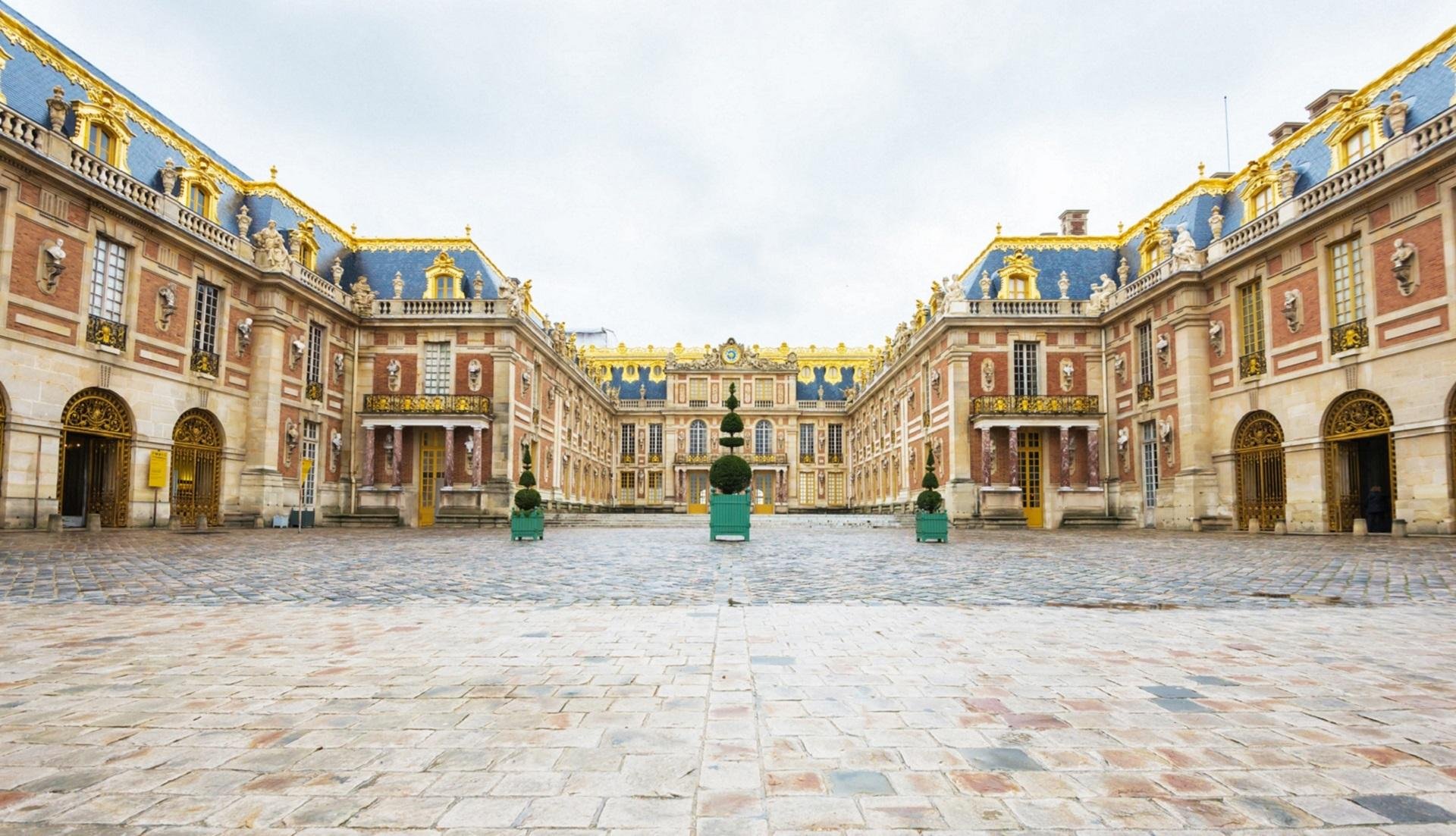
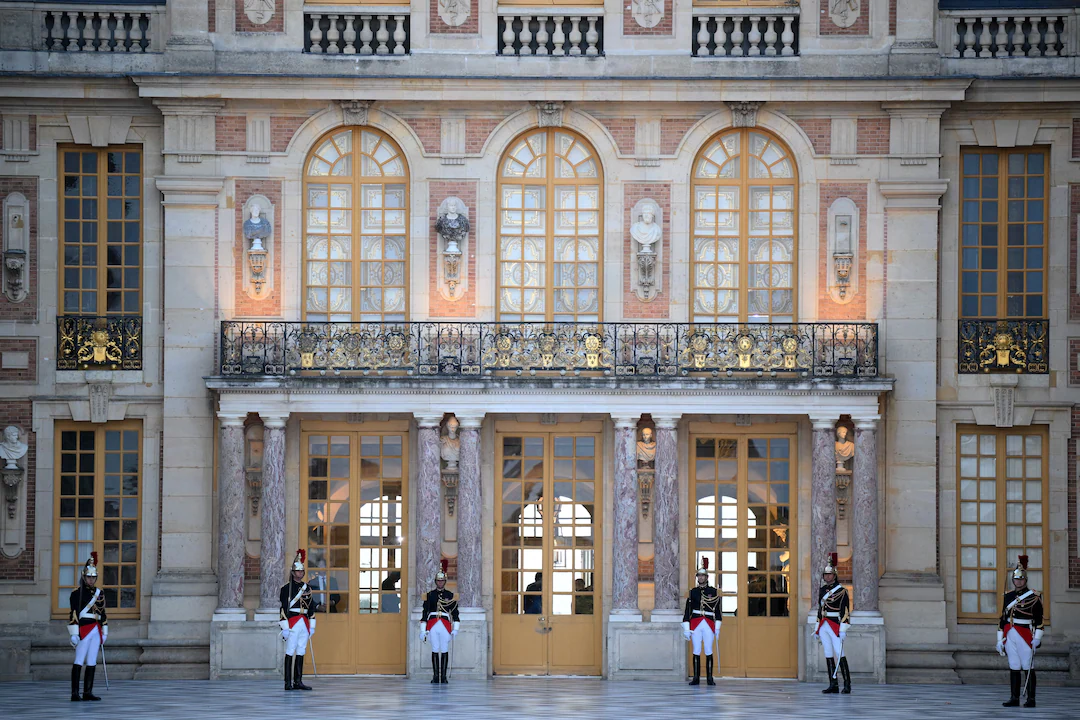
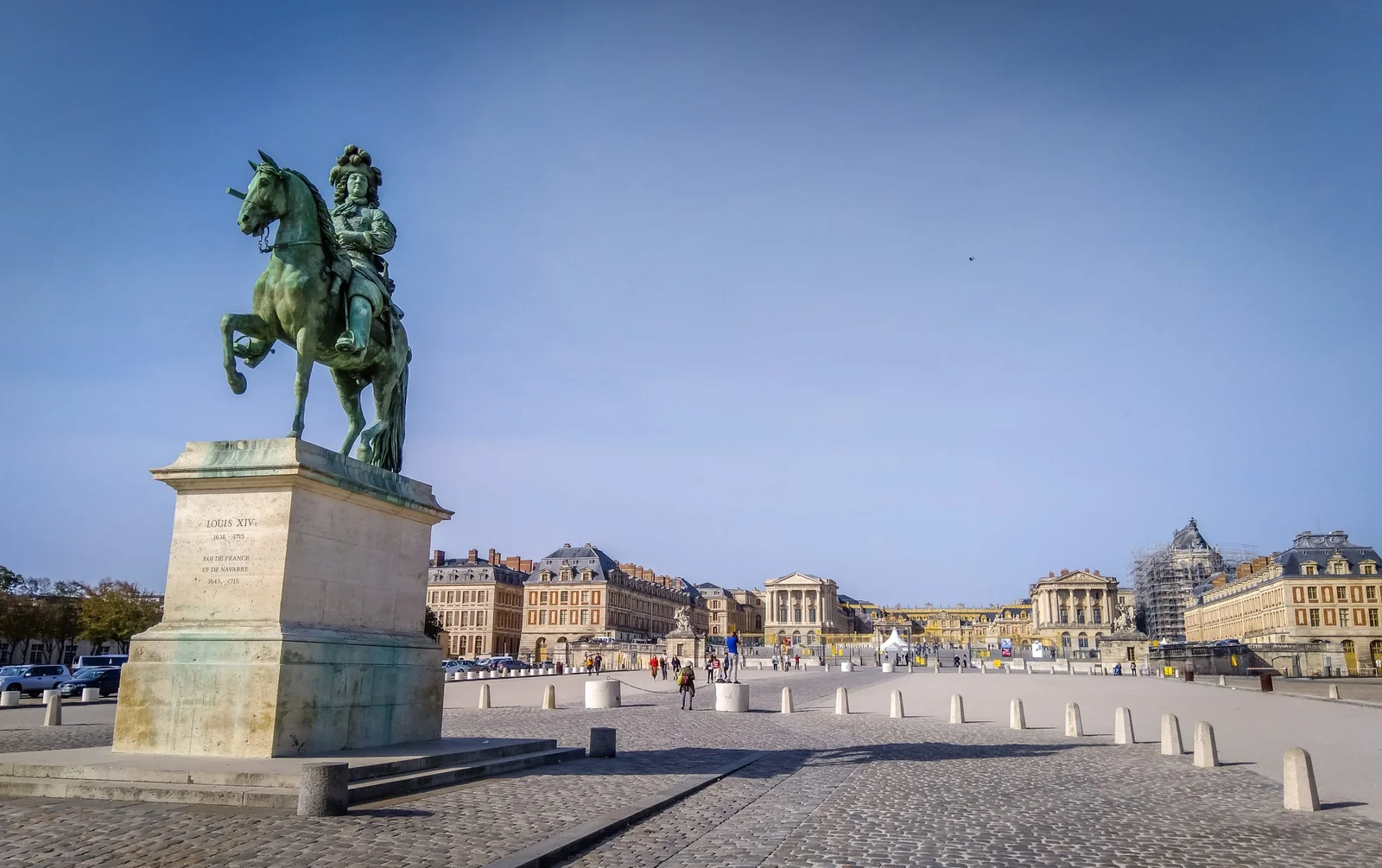
With skip-the-line access, you bypass the perimeter queue and enter through the Cour Royale, the cobbled forecourt where ministers once descended from carriages. Your guide leads you up the Queen's Staircase — a marble ascent lit by tall windows — into the state apartments.
You move through the War Salon into the Hall of Mirrors, where morning light floods the gallery and catches the gilt cornices. The guide points out the painted ceiling panels by Charles Le Brun, seventeen scenes depicting Louis XIV's military victories. You continue into the King's Bedchamber, where the monarch held lever and coucher ceremonies, dressing and undressing before an audience of two hundred. The Apollo Salon follows — the throne room, though the silver throne itself was melted in 1689 to fund wars.
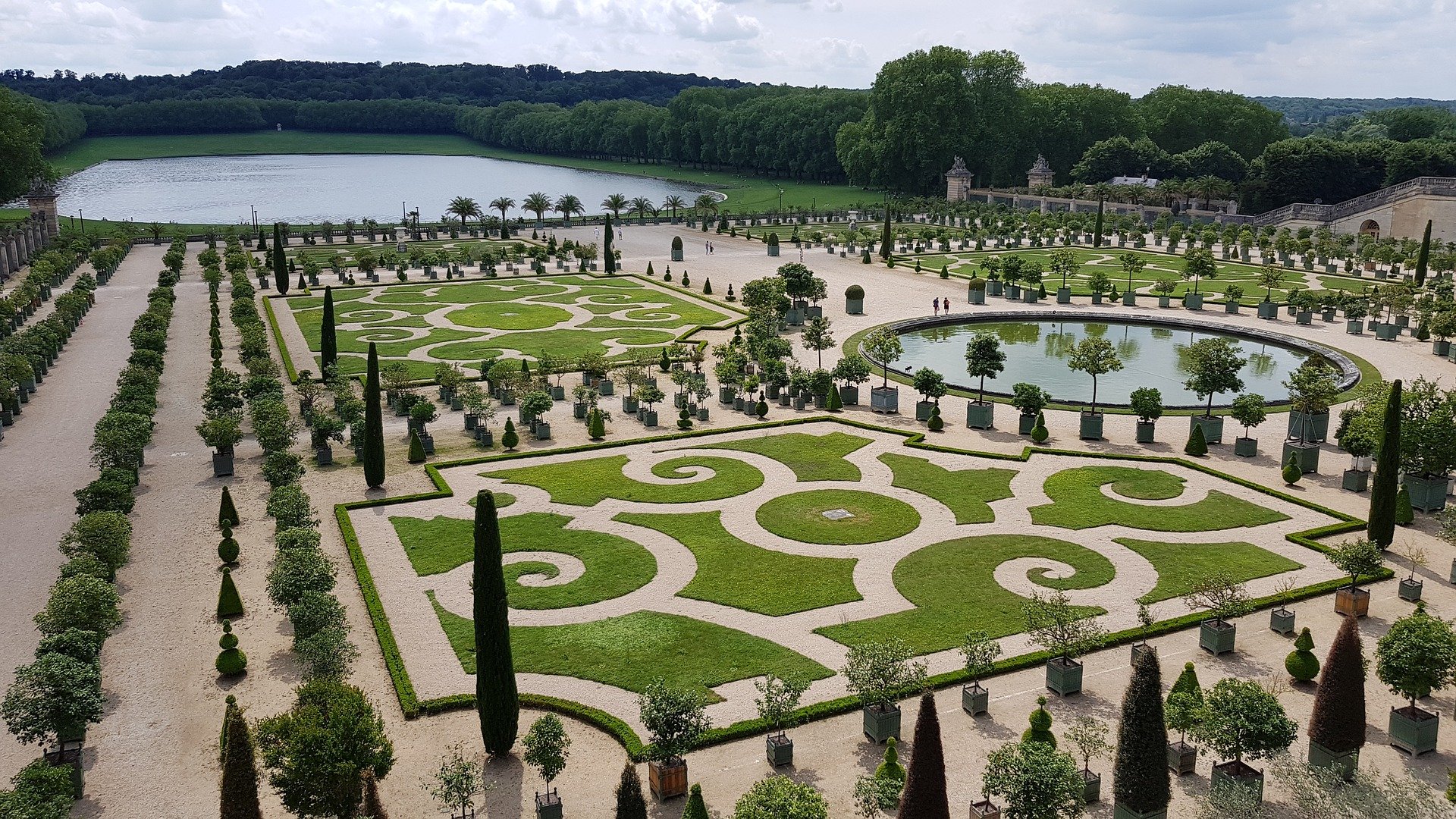
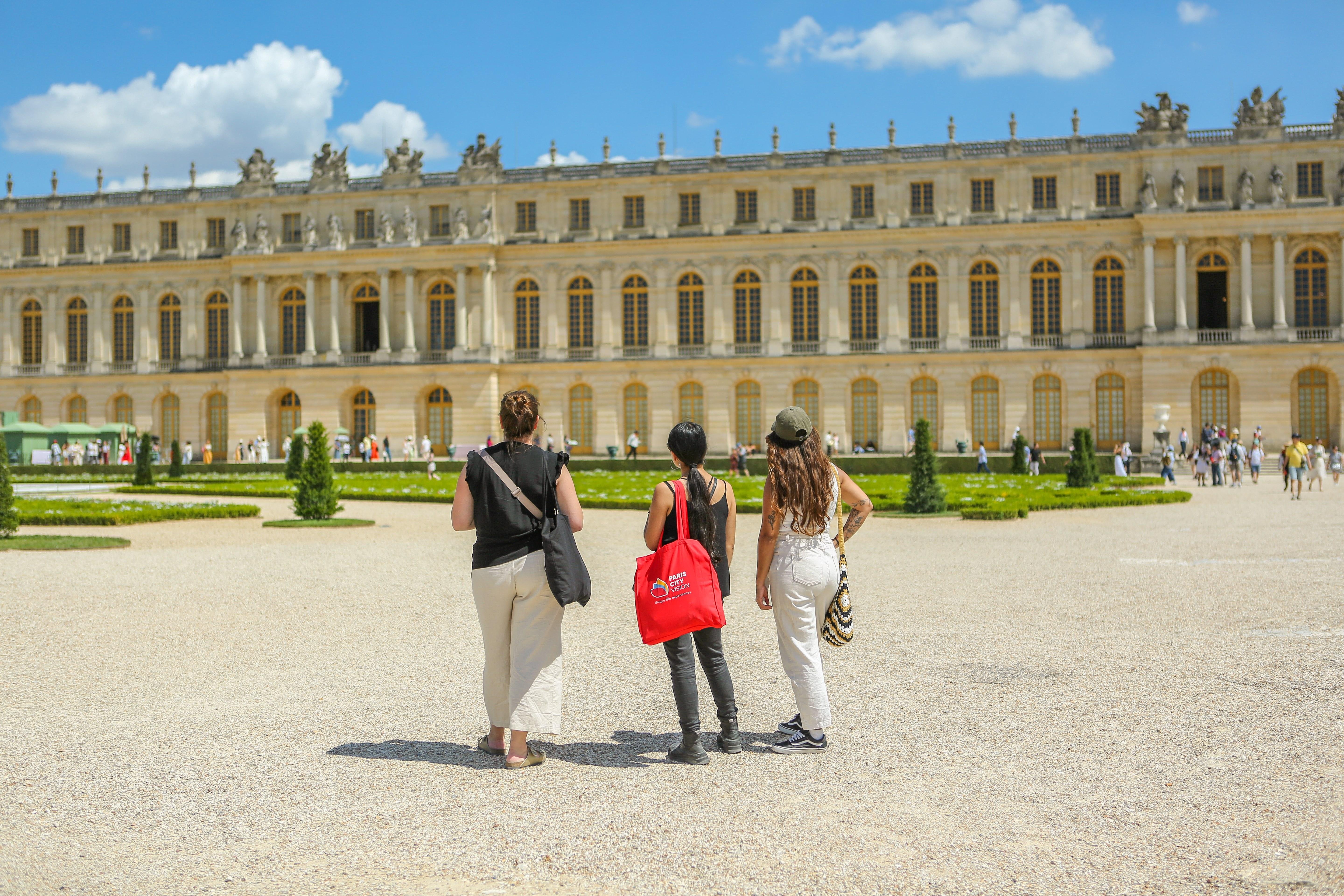
Outside, the gardens unfold in tiers: the Latona Fountain at the top of the central axis, the Apollo Fountain midway down, and the Grand Canal stretching toward the horizon. You walk the gravel paths between sculpted yews and bronze statues. Most half-day itineraries allow ninety minutes for the gardens before regrouping for the return departure, placing you back in Paris by early afternoon.
All the details about your upcoming adventure in one place
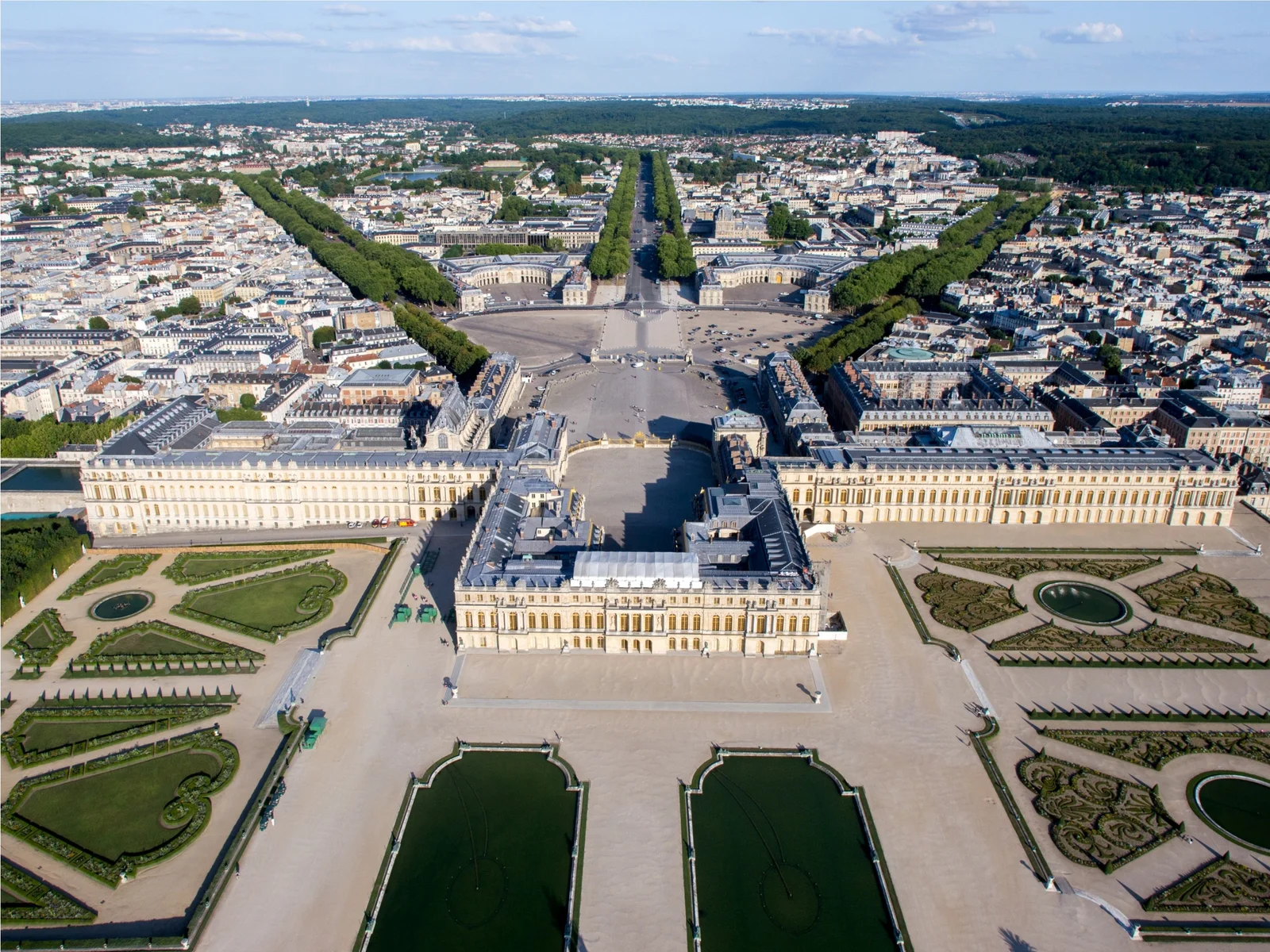
Louis XIV moved his court to Versailles in 1682, transforming a modest hunting lodge into a 2,300-room palace that housed ten thousand courtiers, servants, and soldiers.
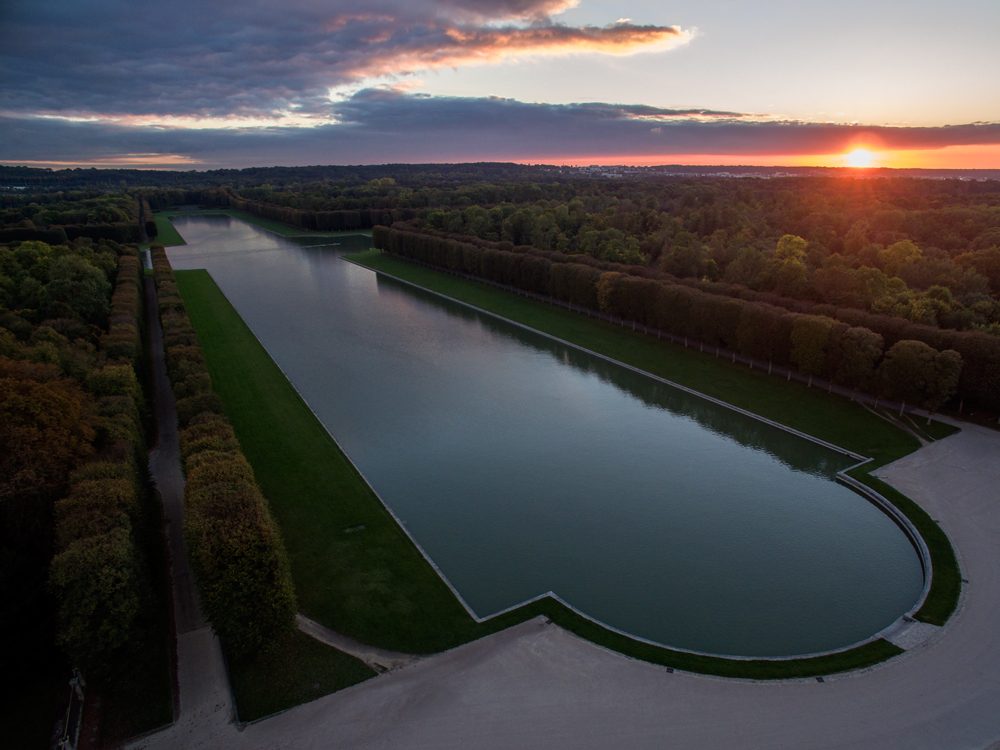
The estate covered nearly 8,000 hectares at its apex, encompassing formal gardens, forested hunting grounds, and the Grand Canal — a 1,670-metre cruciform waterway engineered by André Le Nôtre to reflect the sunset facade. Construction consumed nearly half the kingdom's annual revenue for four decades, yet the Sun King never saw the Chapel Royal completed; he died in 1715, thirteen years before Jules Hardouin-Mansart's final structure opened.
Today the palace receives more than seven million visitors annually, making it France's second-most visited monument after the Eiffel Tower. UNESCO inscribed the estate in 1979, citing its influence on three centuries of European royal architecture — from Schönbrunn to Peterhof, monarchs copied Versailles' enfilade of state rooms and its symbolic fusion of political power with artistic grandeur. A half day tour to Versailles from Paris typically departs central terminals mid-morning, covering the twenty-kilometre journey in forty minutes by train or coach. The Hall of Mirrors remains the visual anchor: seventy-three metres long, seventeen arched windows facing the gardens, and 357 mirrors reflecting candles that once mimicked sunlight. The Treaty of Versailles ending World War I was signed here in 1919, precisely in the gallery where the German Empire had been proclaimed in 1871.
Beyond the state apartments, the palace holds the Royal Opera — a jewel-box theatre seating 712 with blue-and-gold tiers — and Marie-Antoinette's private hamlet, a working farm where the queen played at pastoral life. Le Nôtre's gardens stretch across 800 hectares, structured by geometric parterres, sixty fountains, and 372 sculptures. The orangery shelters 1,200 trees, including palms and pomegranates that winter indoors. Half day tour to Versailles from Paris options now include priority entry, bypassing the security lines that stretch past the Place d'Armes by eleven each morning. Guides lead groups through the King's Grand Apartment, each room dedicated to a Roman deity, and the Queen's Chamber where nineteen royal children were born under public witness — French law required courtiers to observe births and confirm legitimacy. The estate's scale defies casual touring; even a focused visit spans three hours, and the full circuit including the Trianon palaces and gardens requires six.

The Hall of Mirrors remains the visual anchor: seventy-three metres long, seventeen arched windows facing the gardens, and 357 mirrors reflecting candles that once mimicked sunlight.
There is no strict dress code for the Palace of Versailles, but modest, comfortable clothing is recommended since the visit includes long gallery walks and outdoor garden sections. Flat, comfortable shoes are strongly advised because the gravel paths in the gardens and the parquet floors inside the Palace involve significant walking distance.

All visitors pass through airport-style security screening with bag checks and metal detectors at the Palace entrance on Place d'Armes. Backpacks and bags are permitted but subject to inspection, and oversized luggage or suitcases are not allowed inside the State Apartments.
Personal photography without flash is permitted throughout the State Apartments, the Hall of Mirrors, and the gardens. Tripods, monopods, and professional lighting equipment require prior authorization from the Château de Versailles administration and are not allowed for casual visitors.
Children under 18 enter the Palace of Versailles free of charge, making the site practical for a half day tour to Versailles from Paris with kids. Strollers are permitted in the gardens but must be folded inside the State Apartments, and the gravel paths and fountain areas give younger visitors room to move between indoor gallery stops.
The Palace of Versailles offers wheelchair-accessible entrances, elevators to upper floors, and adapted routes through the State Apartments and gardens. Visitors with disabilities and one accompanying person receive free entry, and loan wheelchairs are available at the accueil desk near the entrance, though advance requests are recommended for busy periods.
Small bottled water is allowed inside the Palace, but outside food and full picnics are not permitted within the State Apartments themselves. Eating and picnicking are only allowed in designated garden areas away from the building facades, in line with Château de Versailles conservation rules protecting the historic interiors.
Palace closed all day
Quietest weekday
Busier with weekend visitors
Gardens' Musical Fountains Shows on select Sundays
Hours
Tue–Sun 09:00–18:30, closed Monday
Opening hours
09:00 – 18:30
Getting there
City-center access via metro and bus
Accessibility
Most experiences are wheelchair-friendly — check individual tours
What to bring
Comfortable shoes, water, phone for mobile voucher
Public transport · 35-40 min · Around 8 EUR round trip
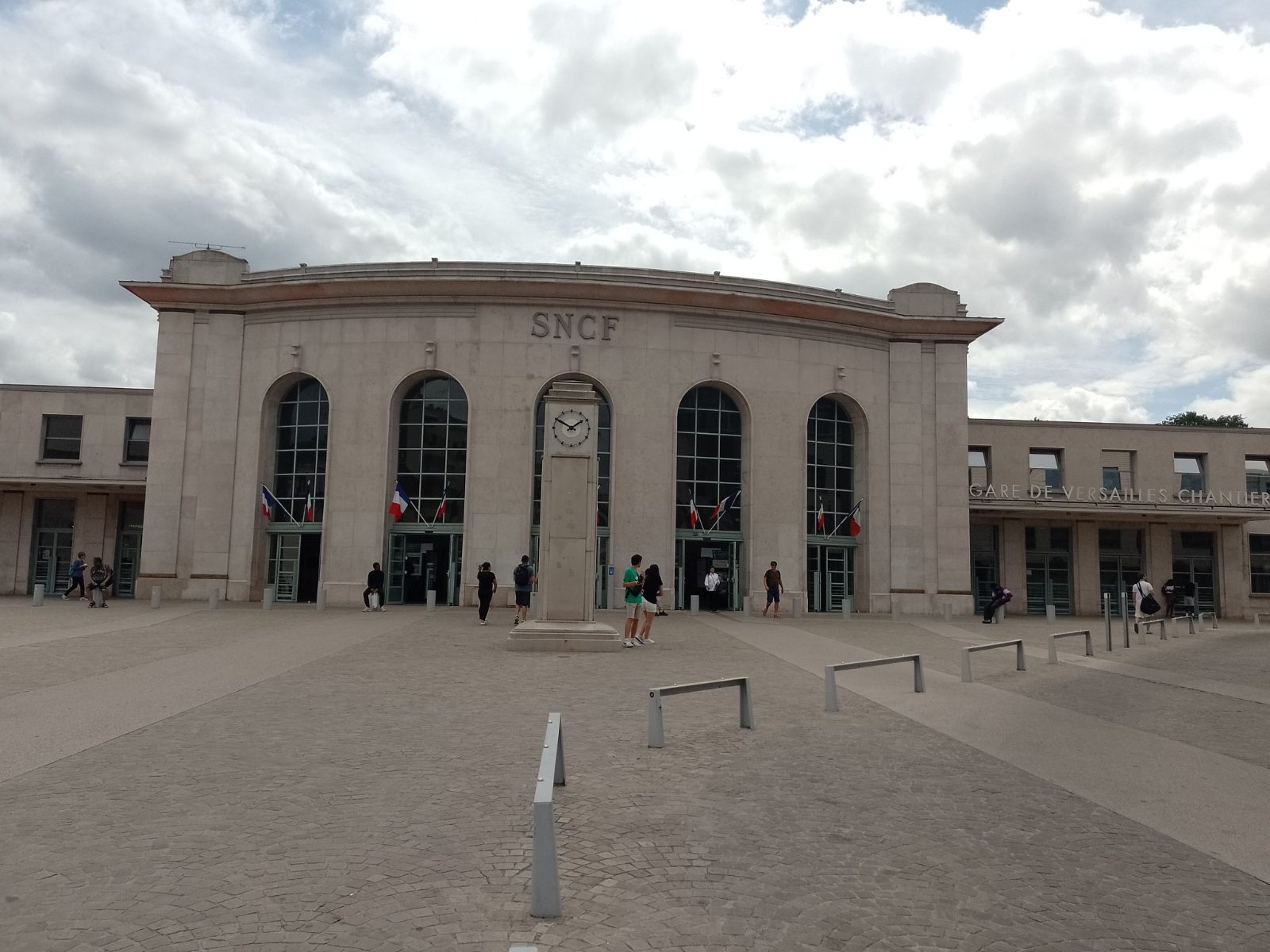
Take RER C from central Paris directly to Versailles Château Rive Gauche station, a short 10-minute walk to Place d'Armes
Car · 30-45 min depending on traffic · Parking fees apply, around 6-8 EUR
Drive via A13 motorway from Paris and park in the Place d'Armes or Cour de Grille paid lots near the entrance
Taxi · 30-40 min · Approx. 50-70 EUR one way
Direct taxi or rideshare from central Paris hotels straight to the Palace entrance
Most half day tour to Versailles from Paris bookings allow free cancellation up to 24 hours before the scheduled departure, with a full refund issued automatically. The Passport ticket portion, priced at 24 EUR for full access, is generally non-refundable once redeemed at the Palace turnstiles.
Recommended time
4 hours
Executing a half day tour to versailles from paris requires prioritizing the Hall of Mirrors immediately upon entry to navigate the royal apartments before peak volume. This Paris landmark experience typically allows enough time to explore the expansive manicured lawns if you secure your half day tour to versailles from paris tickets well in advance. Consider that transit and security checkpoints often consume significant portions of your time, so securing half day tour to versailles from paris tours is wise for those on a tight schedule.
Crowd levels through the day
Weather · crowds · average price — dots go green to amber to red as each metric rises.
March to May brings mild temperatures around 12-18°C and blooming garden parterres, though weekends draw heavy crowds around Easter holidays.
Reserve a half day tour to Versailles from Paris with skip-the-line entry to avoid the ticket counter queue at Place d'Armes.
The Musical Fountains Shows run on select days in the gardens; confirm the schedule on chateauversailles.fr before you go.
Gravel garden paths and long gallery corridors make sturdy flat shoes far more practical than sandals or heels.
Versailles' gardens are exposed and can feel cooler than central Paris, especially in shaded groves.
The Palace is closed every Monday, so half day tour to Versailles from Paris tours never run that day.
Security screening at the entrance can take 15-20 minutes during peak season, so build in buffer time.
The Château de Versailles app offers wayfinding and skips reliance on limited indoor Wi-Fi.
Place d'Armes, 78000 Versailles, France
Main forecourt gathering point before Palace entry
Get directions
Avenue du Général de Gaulle, 78000 Versailles
Common rail meeting point for organized half day tours
Get directionsVersailles began as a modest hunting lodge built by Louis XIII in 1623, a rural retreat far removed from the political intrigues of Paris. His son, Louis XIV, transformed it into the largest palace in Europe, a calculated project to consolidate absolute power. Construction commenced in 1661 under architect Louis Le Vau, painter Charles Le Brun, and landscape designer André Le Nôtre. The Sun King moved the entire royal court and government from Paris to Versailles in 1682, forcing ten thousand nobles, ministers, and servants to live under his direct observation. The palace became a stage for ritual and surveillance, where proximity to the king determined political survival. The Hall of Mirrors, completed in 1684, stretched 73 meters and displayed 357 mirrors—then luxury items produced only in French factories after industrial espionage broke the Venetian monopoly. Every architectural decision served propaganda: the gardens' geometric control over nature mirrored the king's dominion over France. Louis XIV spent roughly 25 percent of national revenue on Versailles, a financial strain that contributed to the fiscal crises of the following century. When Louis XVI and Marie Antoinette inherited the palace, they faced a population that resented the monarchy's isolation and extravagance. On October 5, 1789, thousands marched from Paris to Versailles, forcing the royal family back to the capital and ending the palace's role as the seat of government. After the Revolution, Versailles fell into neglect. Napoleon considered demolishing it. King Louis-Philippe saved the structure in 1833 by converting it into a museum dedicated to French history, a compromise that preserved the architecture while stripping its political function. The palace returned to international prominence in 1919 when the Treaty of Versailles was signed in the Hall of Mirrors, formally ending World War I. Today, visitors booking a half day tour to versailles from paris encounter the same state apartments and gardens that once enforced royal authority, now protected as a UNESCO World Heritage Site. Restoration efforts since the 1950s have returned many rooms to their 17th-century appearance, offering half day tour to versailles from paris tours that reveal the mechanics of absolute monarchy through its physical infrastructure.
Louis XIII constructs a small hunting lodge on the site, establishing the first royal presence at Versailles.
Louis XIV begins the palace's massive expansion, hiring Le Vau, Le Brun, and Le Nôtre to create a monument to absolute power.
The Sun King moves the royal court and government from Paris to Versailles, making the palace the political center of France.
The Women's March on Versailles forces Louis XVI and Marie Antoinette back to Paris, ending the palace's role as the monarchy's seat.
Louis-Philippe converts Versailles into a museum of French history, saving the palace from demolition and abandonment.
The Treaty of Versailles is signed in the Hall of Mirrors, using the palace as the stage for peace negotiations after World War I.
UNESCO designates Versailles a World Heritage Site, recognizing its architectural and historical significance to European civilization.
Stand in the center of this iconic gallery to capture the symmetrical reflections of the arched windows and crystal chandeliers. Use a wide-angle lens to document the opulence of the gilded décor without the heavy crowds.
Position yourself near the doorways to frame the intricate marble work and royal tapestries that characterize this historic suite. This specific area provides a clear view of the enfilade layout.
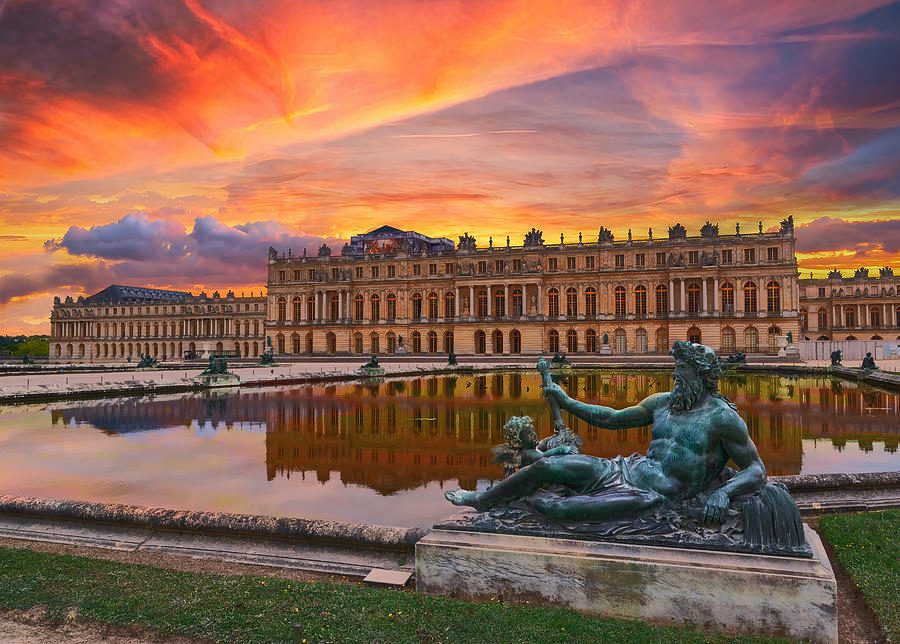
Capture the tiered lead sculptures with the palace facade reflected in the water of the Grand Canal. This viewpoint highlights the landscape design by André Le Nôtre, offering the best composition for a half day tour to versailles from paris.
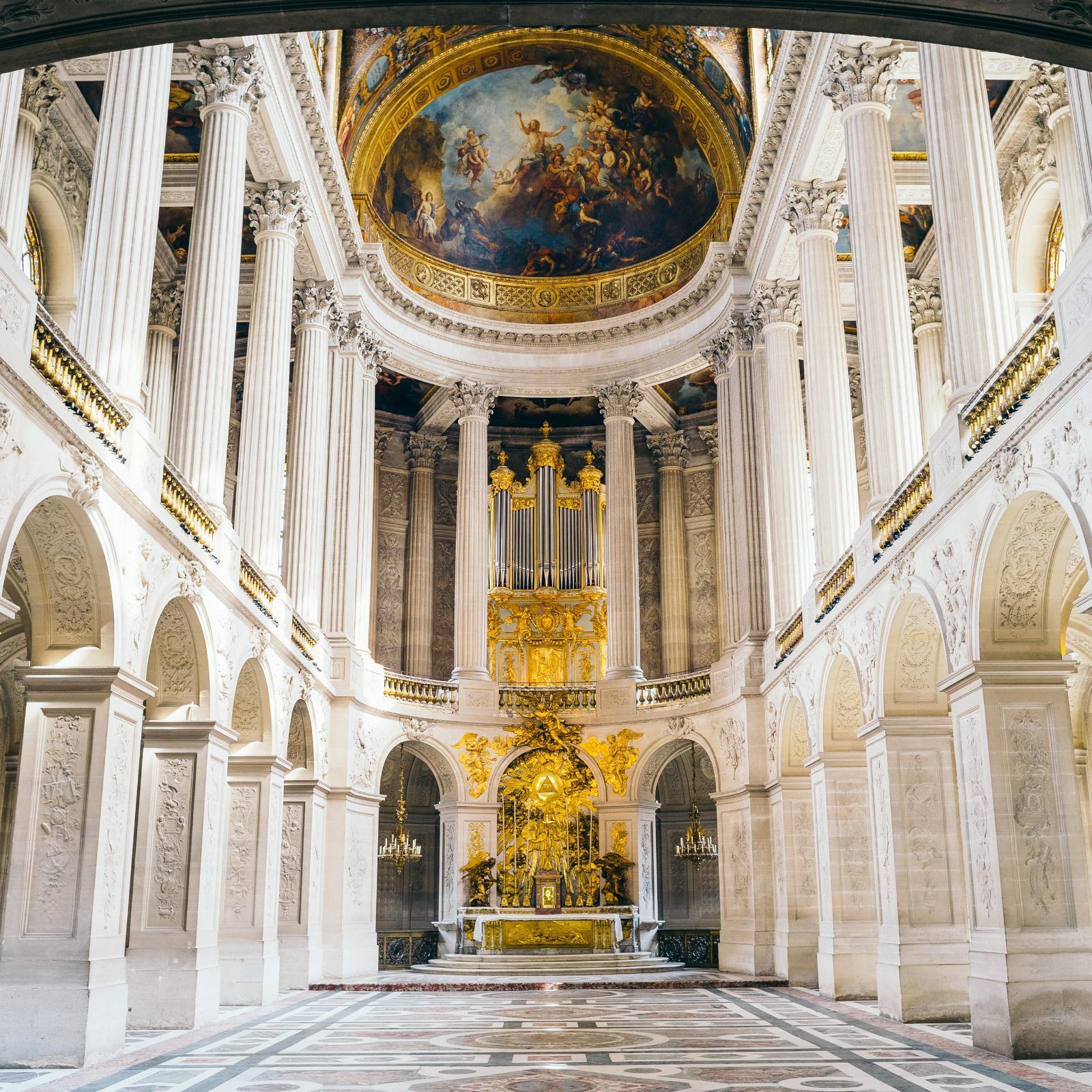
Focus your lens on the soaring vaulted ceiling and the detailed altar from the ground level of the nave. The play of light through the high windows creates soft illumination on the baroque architecture.
Exploring the royal estate as a family is manageable when you balance the historic palace interiors with the sprawling outdoor grounds. A successful half day tour to versailles from paris relies on strategic timing and preparation to keep little ones engaged.
Strollers are allowed in the gardens and park, but are discouraged inside the palace where a soft baby carrier is much more practical for navigating crowds.
You will find multiple restrooms and free baby-changing tables located throughout the estate to assist with young children during your visit.
To avoid burnout, break up your day by exploring the vast gardens or riding the little train between the main palace, the Trianon estate, and the canal.
Secure your half day tour to versailles from paris tickets well in advance, as all visitors—including infants who receive free entry—require a timed reservation slot.
Pack light snacks and water to avoid long wait times at kiosks, though plenty of cafes and restaurants are available across the grounds for a comfortable rest.
Consider a skip-the-line versailles attraction tour to minimize wait times, and arrive between 09:00–10:30 to bypass peak crowds.
Visitors embarking on a half day tour to versailles from paris can choose between upscale dining within the palace walls or casual bites located throughout the expansive gardens. While premium sit-down experiences offer a refined atmosphere, quick-service kiosks and terraces provide efficient alternatives for those looking to maximize their time exploring the historical landmarks.
Elegant contemporary restaurant located in the Pavillon Dufour serving classic French cuisine with views of the Royal Courtyard.;Angelina
Everything you need to know for your journey
The Palace of Versailles is open Tuesday through Sunday from 09:00 to 18:30 and closed on Monday.
Yes, the Palace offers wheelchair-accessible entrances, elevators, and adapted garden paths, with free entry for visitors with disabilities and one companion.
Large suitcases and sharp objects are not allowed, and all bags pass through security screening with metal detectors at the Place d'Armes entrance.
Personal non-flash photography is allowed throughout the State Apartments and gardens, though tripods require prior authorization.
Arriving between 09:00 and 10:30 helps you avoid the peak midday crowds and long security lines at the Palace entrance.
There is no strict dress code, but comfortable walking shoes and modest attire are recommended given the extensive walking involved.
Outside food is not permitted in the State Apartments, though small bottled water is allowed and picnicking is limited to designated garden areas.
The RER C train reaches Versailles Château Rive Gauche station in about 35-40 minutes from central Paris, and paid parking lots are available near Place d'Armes for drivers.
Yes, children under 18 enter free, and the mix of indoor galleries and outdoor gardens makes it manageable for families.
Most half day tour to Versailles from Paris bookings offer free cancellation up to 24 hours before departure with a full refund.
The Grand Trianon, Marie Antoinette's Estate, and the Grand Canal are all within a 10-15 minute walk of the main Palace and combine well with a single visit.
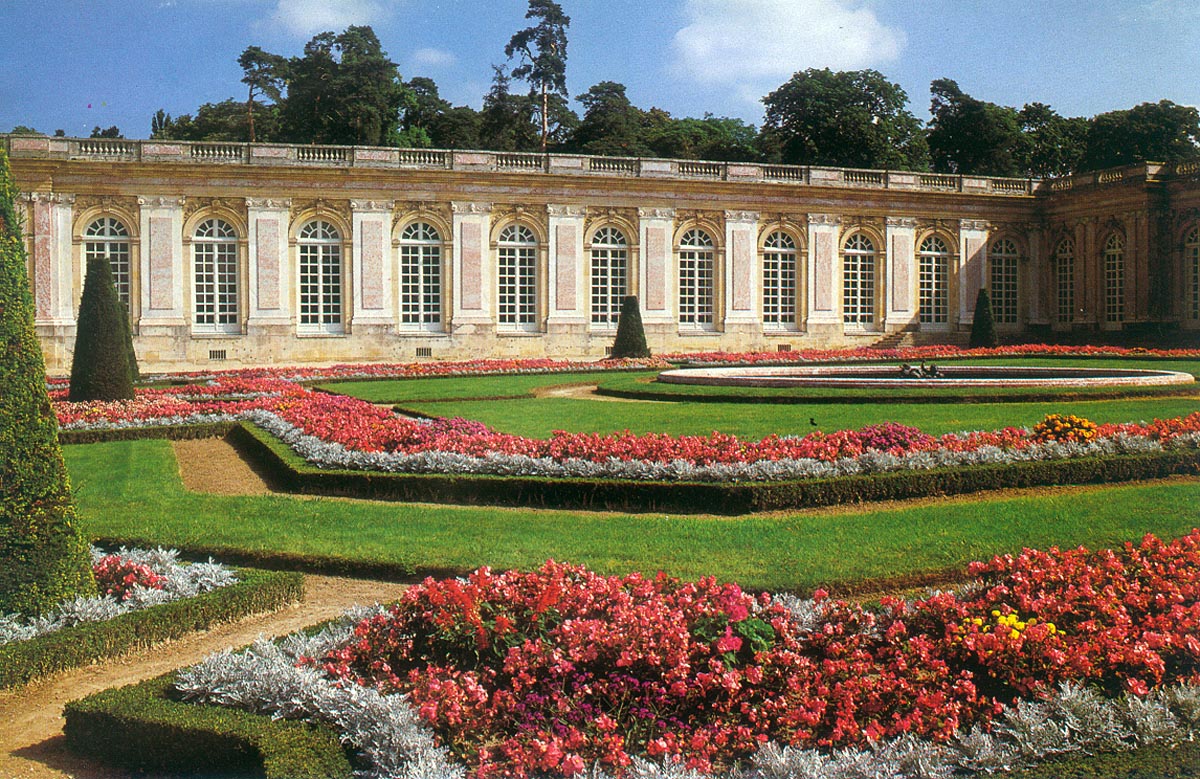
A pink marble retreat built for Louis XIV away from court formality, set within its own garden grounds.
Includes the Petit Trianon and the rustic Hamlet, once the queen's private retreat from palace life.
A long cross-shaped waterway in the gardens historically used for boating parties and royal entertainment.
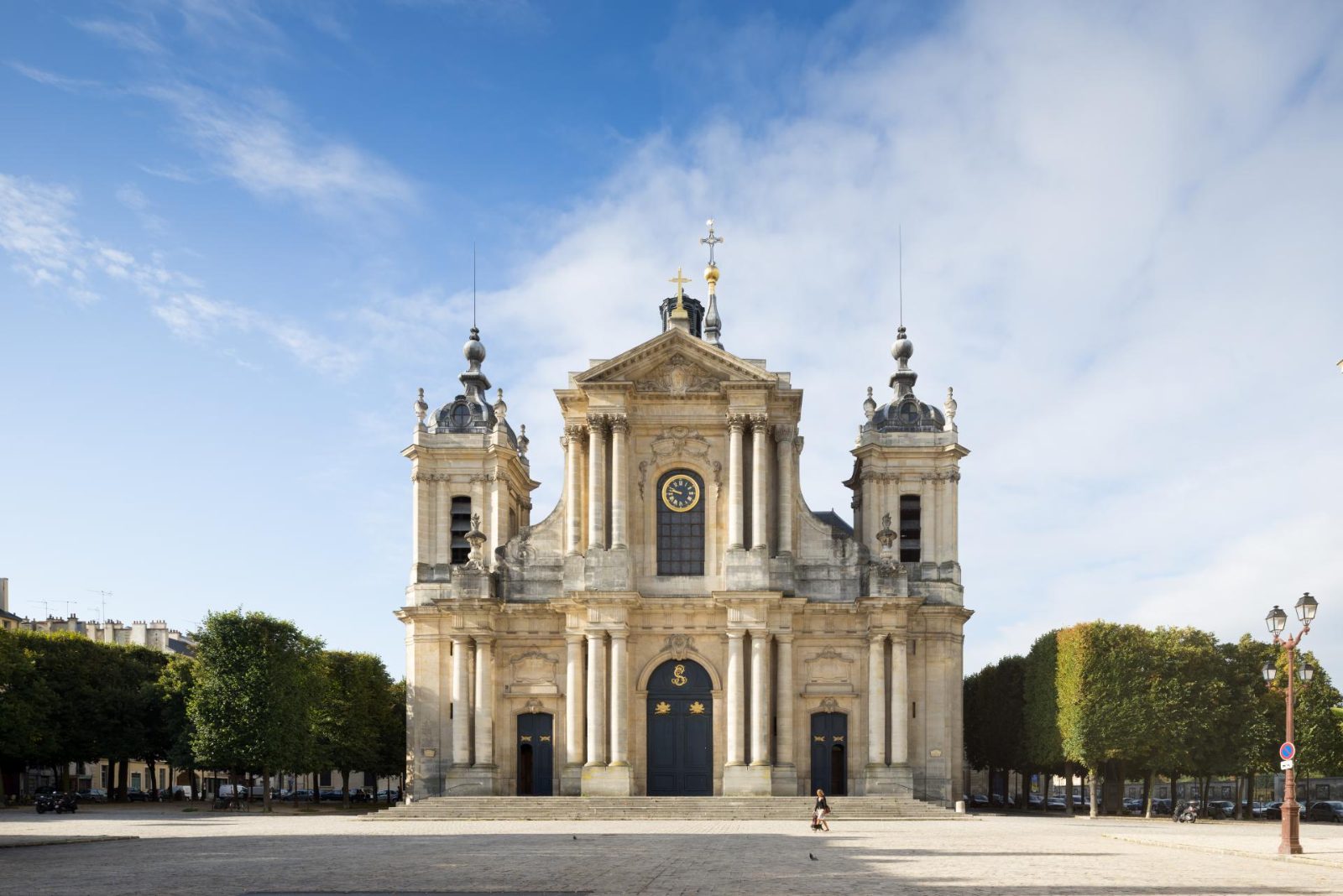
An 18th-century cathedral in the town center, notable for its twin towers and classical facade.
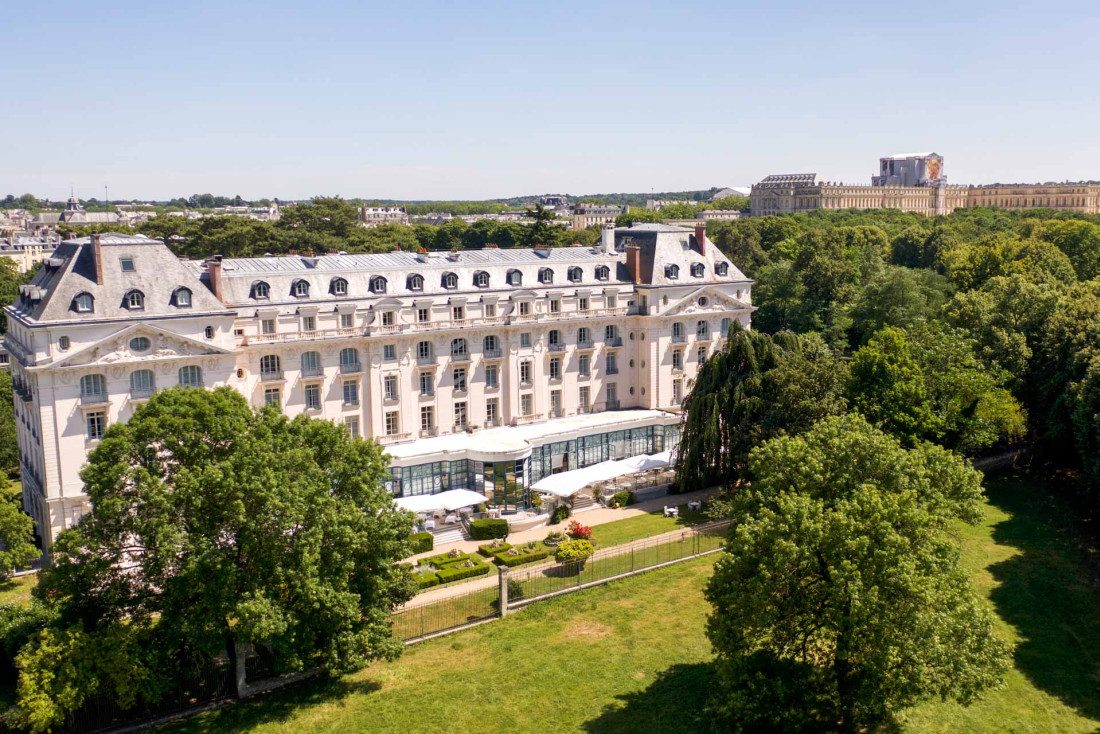
A Waldorf Astoria property bordering the Palace gardens with spa facilities
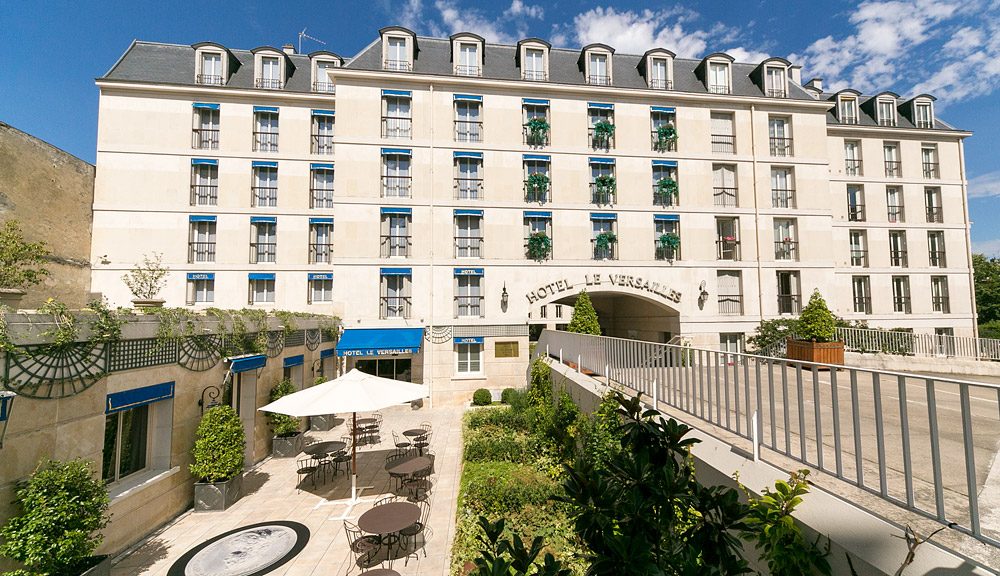
A modern hotel near the train station convenient for half day tour departures
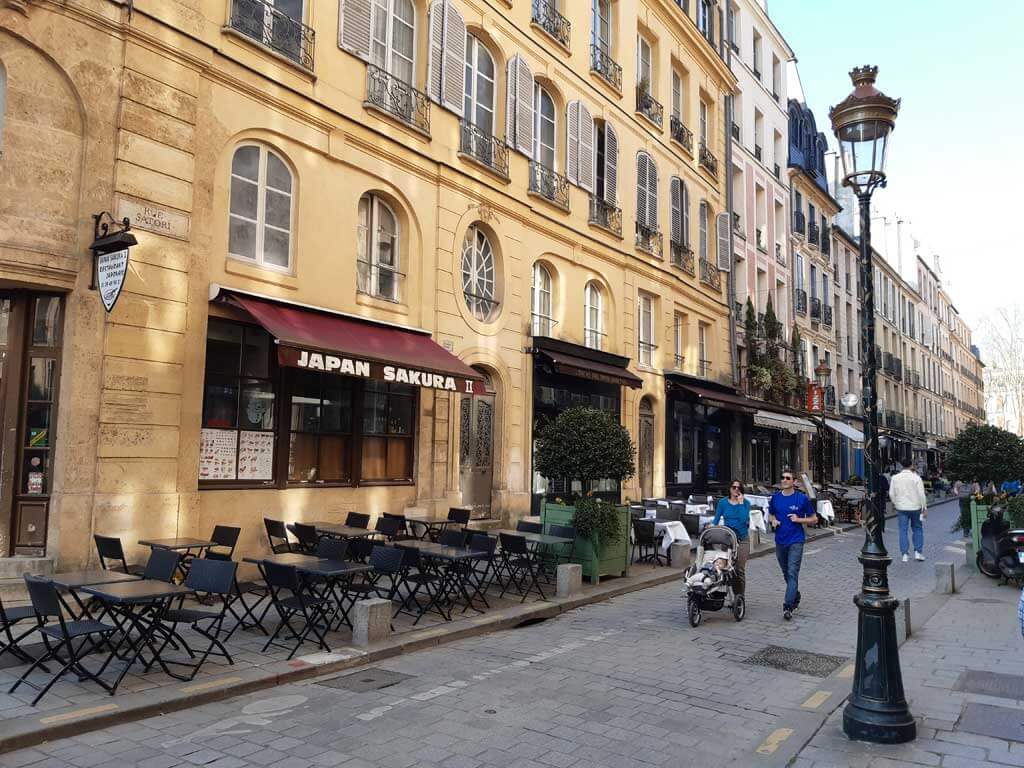
Cluster of boutique hotels and guesthouses near the market and cathedral
A budget chain hotel offering simple rooms within walking distance of the Palace
Join thousands of happy travelers who have discovered this incredible experience
Book Your Experience Now